A comparison between Yamaha’s entry-level lightweight supersport bikes.
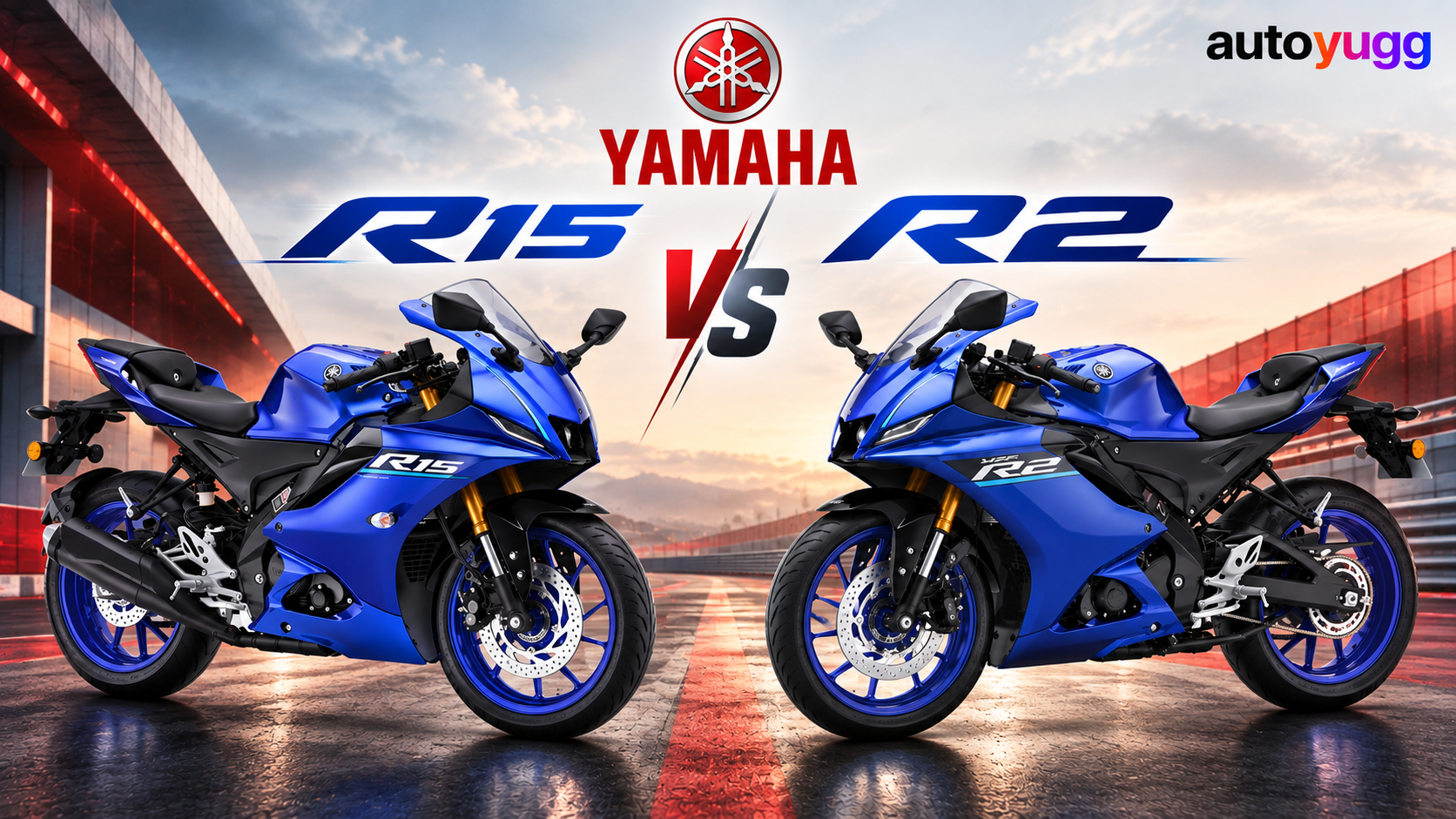
Starting at ₹1.75 lakh for the base R15 V4 and rising to ₹2.53 lakh for the newly launched R2M, Yamaha’s two fully faired motorcycles have a clear ₹56,000 to ₹78,000 price gap between them. Choosing one over the other depends on whether you want the high fuel efficiency, lightweight Deltabox agility and manageable city manners of the R15, or the DOHC rev ceiling, bi-directional quickshifter, and adjustable chassis hardware of the R2.
In this comparison piece, we take a look at both bikes from the Japanese brand. They may share Yamaha’s R-DNA styling, but they are clearly meant for different riders according to their skill levels, highway needs and track aspirations.
Dimensions and Practicality
Both bikes have two different types of body frames.
| Dimensions | Yamaha YZF-R15 V4 / R15M | Yamaha YZF-R2 / R2M |
| Frame Type | Deltabox Perimeter Frame | High-Tensile Steel Diamond Backbone |
| Length | 1,990 mm | 1,980 mm |
| Width | 725 mm | 700 mm |
| Height | 1,135 mm | 1,140 mm |
| Wheelbase | 1,325 mm | 1,340 mm |
| Ground Clearance | 170 mm | 170 mm |
| Seat Height | 815 mm | 810 mm |
| Kerb Weight | 141 kg | 149 kg (Base) / 150 kg (R2M) |
| Fuel Tank Capacity | 11 Litres | 12 Litres |
Note: The Yamaha R2 has an 810 mm seat height that sits 5 mm lower than the R15 V4, and an adjustable footpeg to customise cornering lean angles.

While the R15 uses the celebrated pressed-steel Deltabox frame, the R2 offers a newly engineered 14 kg high-tensile steel tube diamond backbone frame. It packages the taller 204cc DOHC cylinder head securely while keeping the narrow waistline between the rider’s knees intact. And despite having a larger engine, the R2 weighs 149 kg in its base trim, which is only 8 kg more than the R15.
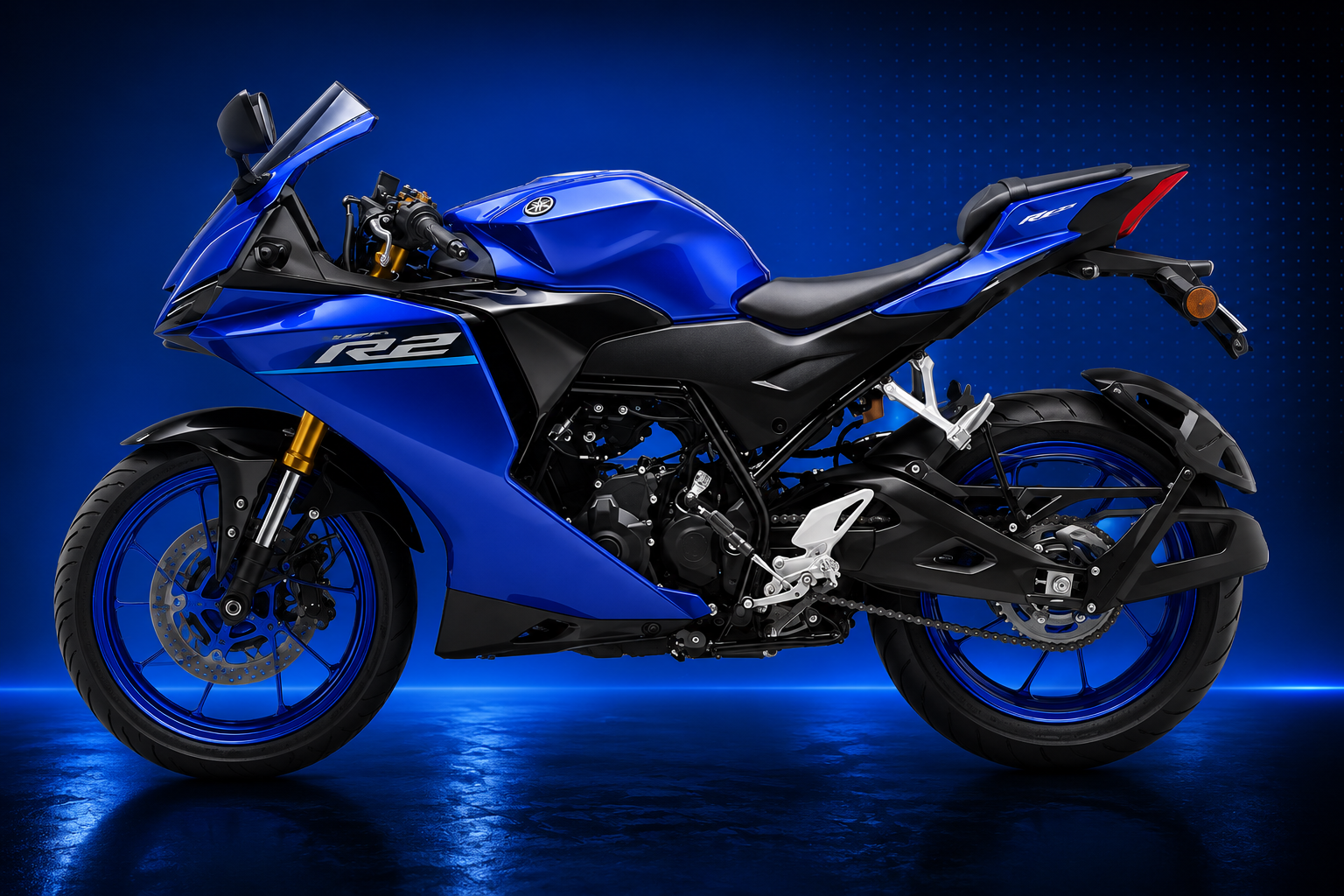
The R2’s 810 mm saddle also sits closer to the ground than the R15’s 815 mm perch; shorter riders can get their boots down more securely at traffic signals. The clip-on handlebars on the R2 sit at a committed, low-set angle like the R15. But the R2 offers multi-position adjustable rear-set footpegs. Track enthusiasts can raise the pegs upward and rearward to prevent boot-slider contact at extreme lean angles. The R2 also expands the fuel tank to 12 litres, one litre more than the R15’s.
Powertrain and Performance Dynamics
The Yamaha R2 generates 26.1 bhp and 19.1 Nm of torque, outpowering the R15 V4 comfortably.
| Specification | Yamaha YZF-R15 V4 | Yamaha YZF-R2 |
| Engine | 155 cc | 204 cc |
| Valvetrain | SOHC, 4-Valve with VVA | DOHC, 4-Valve (No VVA) |
| Power | 18.4 PS (18.1 bhp) @ 10,000 rpm | 26.5 PS (26.1 bhp) @ 10,000 rpm |
| Torque | 14.2 Nm @ 7,500 rpm | 19.1 Nm @ 8,000 rpm |
| Transmission | 6-Speed with Assist and Slipper Clutch | 6-Speed with Assist and Slipper Clutch |
| Quickshifter | Upshift-Only (Select Trims and R15M) | 3rd-Gen Bi-Directional (Mid and R2M Trims) |
| Fuel Economy | 45.00 to 55.00 kmpl | 38.00 to 42.00 kmpl (Estimated) |
The two powertrains offer their performance through completely different cylinder head designs. The R15 has a Single Overhead Camshaft (SOHC) setup with Variable Valve Actuation (VVA). The R2 doesn’t depend on VVA for higher performance; it has a high-efficiency Dual Overhead Camshaft (DOHC) four-valve layout instead.
To ensure durability at high engine speeds, Yamaha coats the R2’s valve lifters with Diamond-Like Carbon (DLC), a low-friction material technology taken straight from the flagship YZF-R1. It produces 35 per cent more peak torque than the R15, which means getting rid of the latter’s real-world limitation: quicker highway overtakes.
Suspension, Braking and Electronic Rider Aids
The Yamaha R2 offers ride-by-wire throttle modes (Street, Sport, Rain) and a bi-directional quickshifter, whereas the R15 V4 has an upshift-only quickshifter.
| Hardware and Electronics | Yamaha YZF-R15 V4 / R15M | Yamaha YZF-R2 / R2M |
| Front Suspension | 37 mm USD Fork (Non-adjustable) | 37 mm KYB USD Fork (Preload adjustable on R2M) |
| Rear Suspension | Linked-Type Monocross Shock | Linked-Type Monocross Shock |
| Front Braking | 282 mm Disc with Twin-Piston Calliper | 282 mm Disc with Four-Piston Calliper |
| Rear Braking | 220 mm Disc with Single-Piston Calliper | 220 mm Disc with Single-Piston Calliper |
| Anti-Lock Braking (ABS) | Dual-Channel ABS Standard | Dual-Channel ABS Standard |
| Traction Control (TCS) | Electronic Traction Control Standard | Switchable Traction Control Standard |
| Riding Modes | Street and Track Display Themes (No ECU mapping) | Yamaha Ride Control (Street, Sport, Rain throttle modes) |
| Cockpit Display | Inverted LCD (TFT Screen on R15M) | 5.0-inch Full-Colour TFT Display Standard |
| Ignition Key | Traditional Key with Shutter | SmartKey Keyless Ignition System (R2M) |

Both motorcycles get 37 mm inverted front forks and 282 mm front disc brakes with dual-channel ABS and 140-section rear radial tyres. On the R15 V4, the “Track” and “Street” modes only change the visual layout of the tachometer, leaving throttle response completely unchanged. In contrast, the R2 offers Yamaha Ride Control (YRC), which uses an electronic throttle to change fuel injection delivery and traction control intervention across its Street, Sport, and Rain modes.
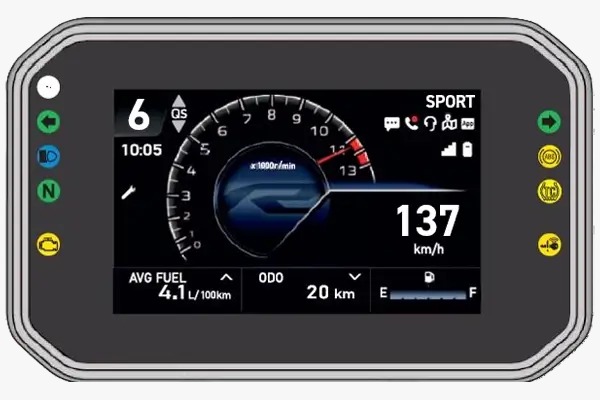
The shifting mechanisms are also different. While higher trims of the R15 offer an upshift-only quickshifter, the R2 equips its mid and R2M trims with a third-generation bi-directional quickshifter. This system includes an auto-blipper, allowing the rider to execute clutchless downshifts before diving into corners on the track.
Price, Variant Distribution and Running Costs
The entry-level Yamaha R2 Standard starts at ₹2.30 lakh and is around ₹56,000 more than the base R15 V4. There’s a clear difference in the price bracket of the two bikes.
Here’s the pricing of the R15.
| Model Variant | Ex-Showroom Price | Key Hardware Features Included |
| R15 V4 Standard (No Quickshifter) | ₹1.75 Lakh | Metallic Red, Pearl White, Dual-Channel ABS, Traction Control |
| R15 V4 Standard (With Quickshifter) | ₹1.79 Lakh | Racing Blue, Intensity White, Upshift Quickshifter |
| R15M Metallic Grey | ₹1.90 Lakh | Colour TFT Screen, Upshift Quickshifter, Silver Swingarm |
| R15M Icon Performance | ₹2.00 Lakh | Carbon Edition styling, 3D Badging, LED Puddle Lamp |
Take a look at how the R2 is priced in comparison.
| Model Variant | Ex-Showroom Price | Key Hardware Features Included |
| R2 Standard | ₹2.30 Lakh | Metallic Black, 204cc DOHC, 5-inch TFT, 3 Ride Modes |
| R2 Blue and White Variants | ₹2.39 Lakh | Bi-Directional Quickshifter, Racing Blue / Pearl White colours |
| R2M | ₹2.53 Lakh | Adjustable USD Forks, Adjustable Levers, Faux-Suede Seat, SmartKey |
In terms of running expenses, the R15 is a lot cheaper to run daily. In real-world mixed city riding, its 155cc engine consistently returns 45 to 50 kmpl, which means roughly ₹2.00 to ₹2.22 per kilometre at ₹100 per litre for petrol. The 204cc R2 returns around 38 to 40 kmpl under relaxed commuting, which drops to around 30 to 34 kmpl if you rev the bike past 8,000 rpm on the highways. Then the running expenses reach roughly ₹2.50 to ₹2.95 per kilometre.
AutoYugg Verdict: Yamaha R15 or Yamaha R2?
The Yamaha YZF-R15 V4 continues to be the financial and practical option if you are a daily college or office commuter who occasionally visits winding weekend roads. Its 141 kg weight keeps traffic-filled commutes manageable, and its 45-plus kmpl fuel economy keeps running costs on the lower side.
But if you’ve outgrown the 150cc class, go for the Yamaha YZF-R2 then. This one offers greater intercity highway performance, has the overtaking torque that the R15 lacks and easily maintains 120 kmph touring speeds without feeling strained. You also get a 3rd-generation bi-directional quickshifter, genuine ECU riding modes and fully adjustable suspension on the R2M.