A beginner-friendly guide to checking the actual battery health and other hidden faults before buying a pre-owned electric car.
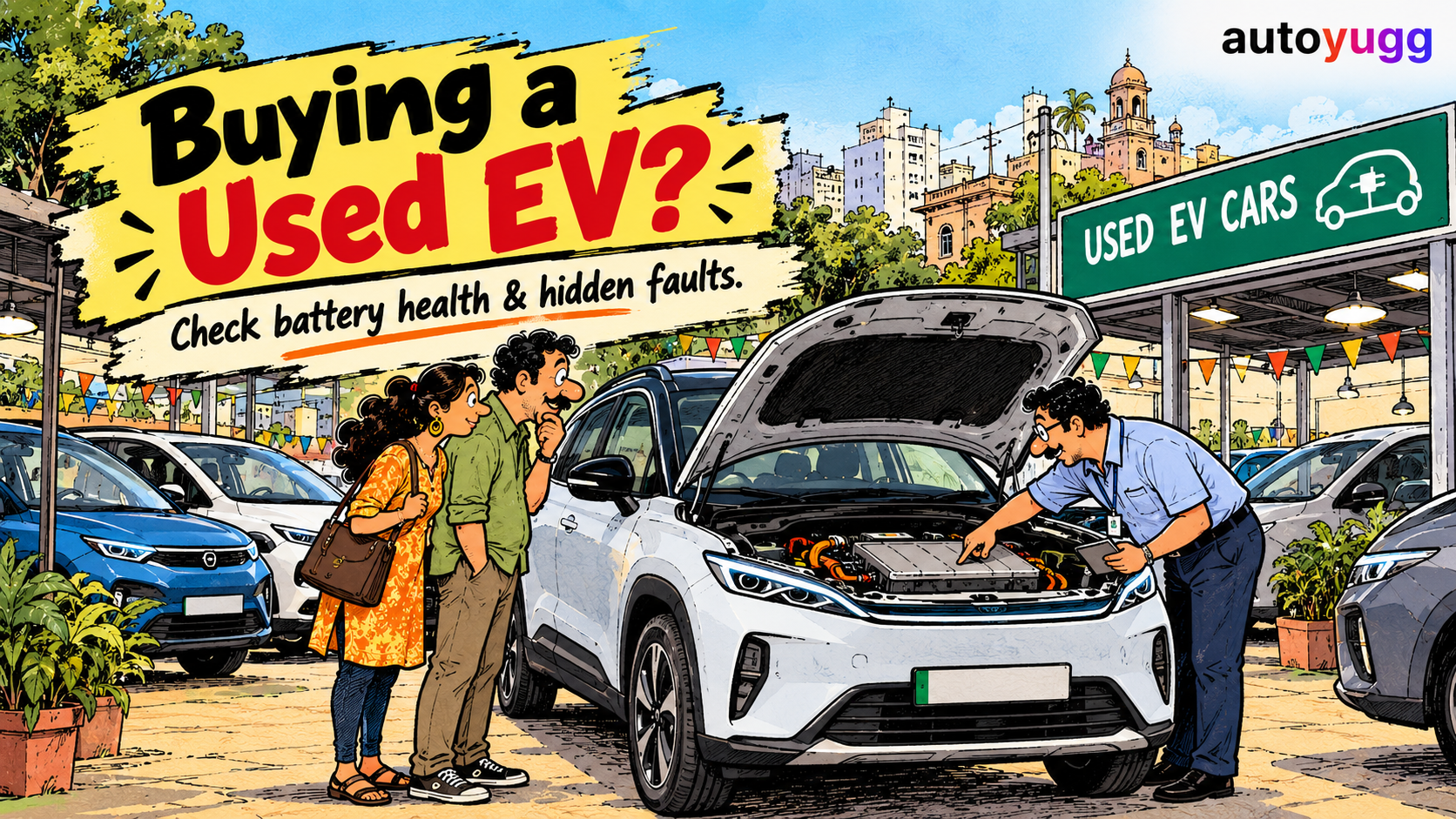
For a prospective buyer, choosing a second-hand EV sounds like an economical decision: you get zero tailpipe emissions, ultra-low running costs and a smooth, silent automatic drive at a fraction of the original showroom price. But actually, nearly 40% to 50% of the entire resale value of an electric vehicle is locked inside the high-voltage battery pack sealed beneath the floor.
Key Takeaways
- A dashboard showing “100% Charge” does not mean the EV’s battery is healthy.
- Reading the car’s computers via the OBD port can reveal any digital odometer fraud.
- The OBD scanner identifies hidden weak cells that can cause sudden drops in driving range.
Early generations of popular EVs like the Tata Nexon EV, MG ZS EV and Mahindra XUV400, alongside newer models like the Tiago EV and Punch EV, are now entering the used market in large numbers. But inspecting these vehicles requires an entirely different approach than checking a conventional petrol or diesel car.
You cannot see battery wear with your eyes, and you cannot figure out at a glance when a battery cell is actually dying. For reasons like these, an On-Board Diagnostics (OBD) scan can prove to be the single most important tool in your pre-purchase inspection.
What Is an OBD Scan and How Does It Work?
Every modern car comes with an On-Board Diagnostics (OBD-II) port. It is a small, standardised 16-pin socket, usually tucked away under the dashboard near the steering wheel.
In a traditional car, service centres plug a scanner into this port to diagnose check-engine lights. In an electric vehicle, the OBD port connects directly to the car’s central nervous system, particularly the Battery Management System (BMS) and the Motor Control Unit.
By plugging in an EV-specific scanning tool or a Bluetooth OBD reader paired with diagnostic software, you can bypass the simple screens on the dashboard and read the raw, unfiltered operating data stored deep within the vehicle’s electronic control computers. And this data is quite critical before transferring any money to a seller.
From here on, we have mentioned the most important factors that you need to know if you’re considering picking up a used EV from the market.
1. State of Charge vs State of Health: The 100% Illusion
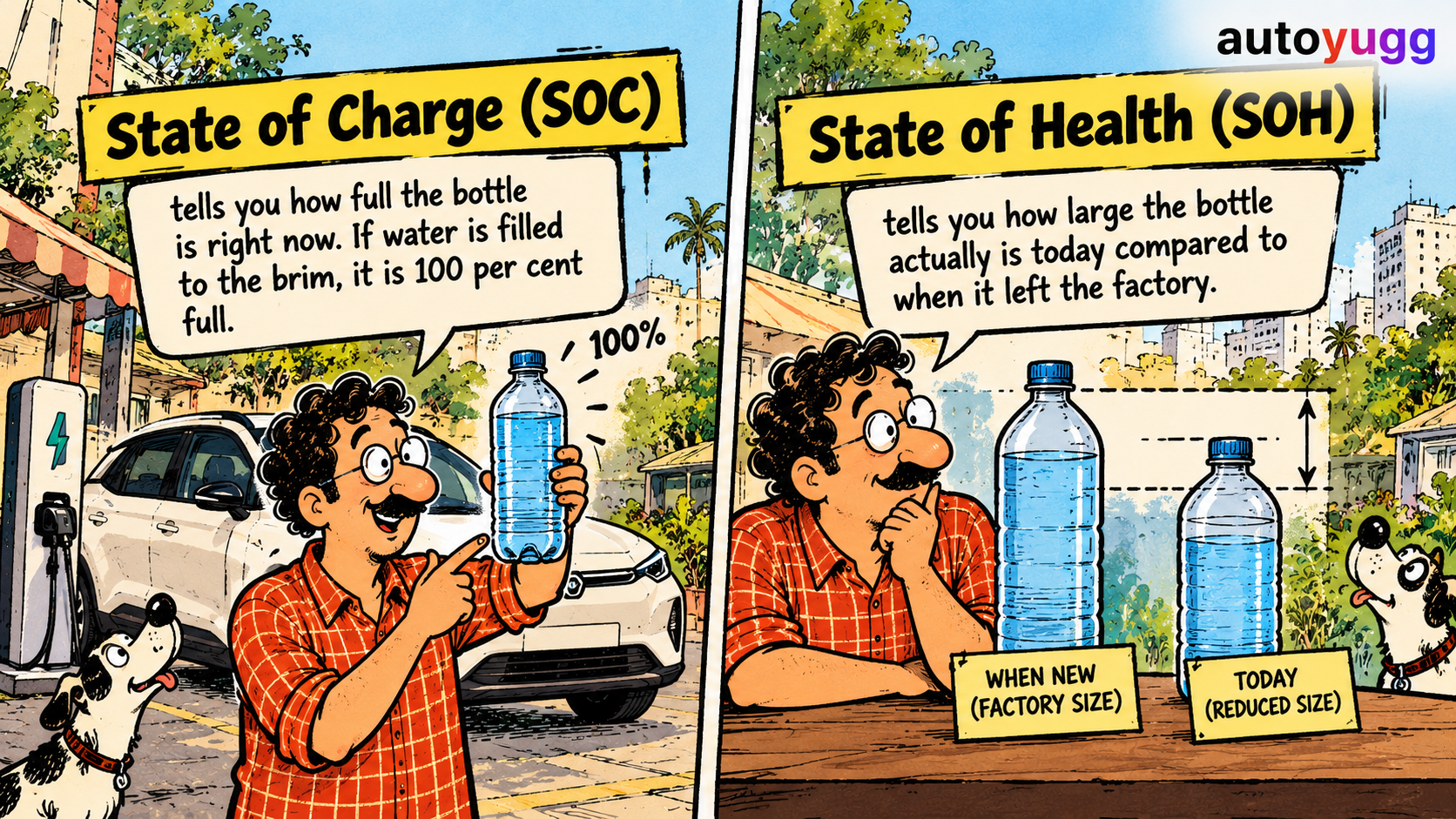
The most common trap for first-time used EV buyers is trusting the charge meter on the instrument cluster. When a dealer plugs in the car and charges it completely, the dashboard may show a battery icon filled to 100%. Many buyers assume it means the battery is in fresh condition. However, this figure is actually only the State of Charge (SOC).
To understand the difference, think of the battery like a water bottle:
- State of Charge (SOC) tells you how full the bottle is right now. If water is filled to the brim, it is 100 per cent full.
- State of Health (SOH), however, tells you how large the bottle actually is today compared to when it left the factory.
Over years of driving and charging, lithium-ion batteries naturally lose some of their chemical storage capacity. A battery that could originally hold 40 units of energy might only be able to hold 30 units four years later. When you plug that car in, the dashboard will still say “100% Charged,” but that 100% now represents a much smaller total amount of energy. The car will deliver fewer kilometres on a single charge than the original brochure claimed.
An OBD scanner reads the internal Battery Management System, which tracks the permanent chemical health of the pack. An OBD report showing an SOH of 92% means the battery has aged gracefully. If the scan shows an SOH of 75%, the car has lost a quarter of its original driving range.
2. Spotting “Weak Cells” Before They Strand You
An electric vehicle battery pack consists of hundreds of small, individual battery cells packaged into modules and wired together. For the car to run smoothly, all of these individual cells must work in complete harmony.
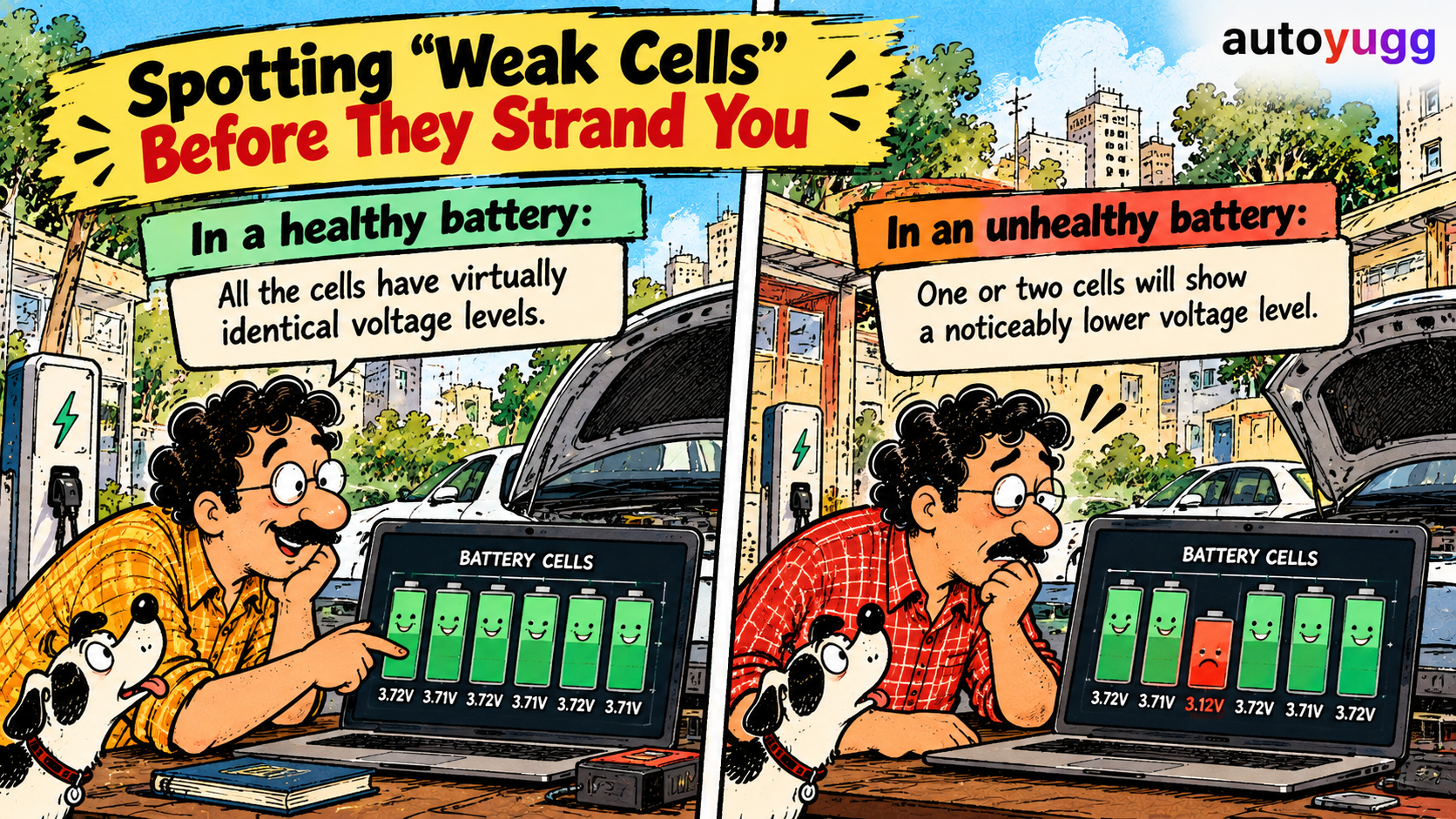
During an OBD scan, the software pulls up a live visual graph showing the voltage level of every single cell inside the battery pack:
- In a healthy battery: All the cells have virtually identical voltage levels.
- In an unhealthy battery: One or two cells will show a noticeably lower voltage level.
When a battery has even one defective cell, it can be a problem. As you accelerate, that weak cell runs out of energy much faster than the others. Replacing individual battery cells or modules inside an out-of-warranty sealed battery pack is extremely expensive and complex.
3. Finding How the Car Was Charged (Slow vs Fast Charging)
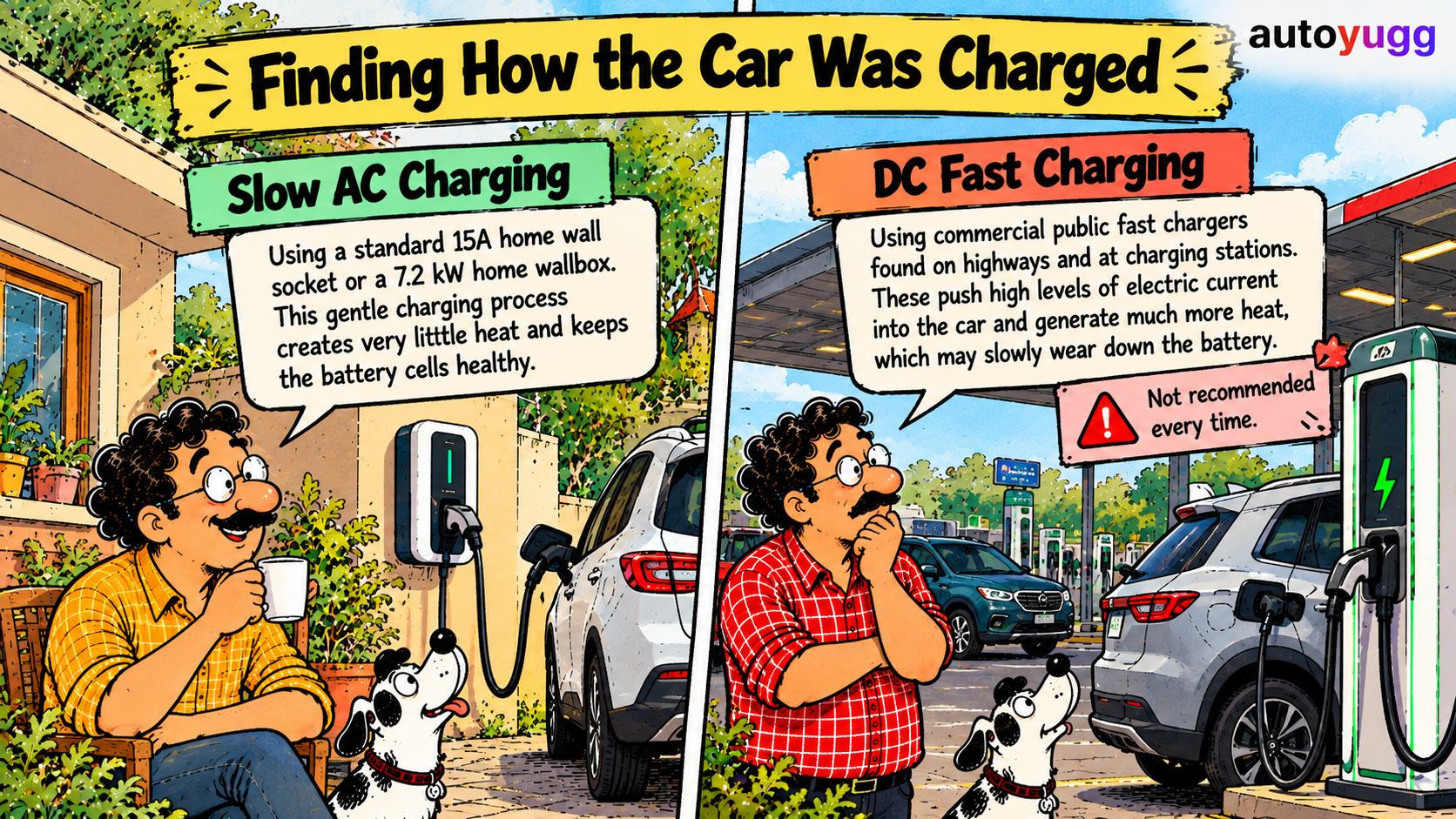
There are two main ways an EV gets charged in India:
- Slow AC Charging: By using a standard 15A home wall socket or a 7.2 kW home wallbox. This gentle charging process creates very little heat and keeps the battery cells healthy.
- DC Fast Charging: By using commercial public fast chargers found on highways and at commercial charging stations. These push high levels of electric current into the car and generate much more heat, which may slowly wear down the battery.
An OBD scan pulls up the lifetime charging stats stored inside the car’s computer. It will tell you exactly how many times the car was charged with a DC fast charger or a slow home charger, as well as the total amount of electricity taken from each source.
If the scan shows that a private car spent 90 per cent of its life charging at home, the battery will likely last for years without issue. But if the scan shows that a car was filled with commercial DC fast chargers almost daily, the battery’s lifespan may be much, much shorter.
4. Catching Digital Odometer Fraud
Sometimes, dishonest sellers may also use plug-in handheld tools to wind back the digital odometer from 1,20,000 km to an attractive 40,000 km.
In a traditional petrol car, proving this is actually not easy if the service records are missing. But in an electric vehicle, it’s not at all easy to hide this. A seller with limited technical knowledge will likely be unaware of how to erase the deep background information stored within the Battery Management System (BMS) and the motor controller.
On the contrary, a skilled technician performing an OBD scan may look at this figure and discern any discrepancies quickly. If it is shown that the vehicle has burnt electricity to travel more than 1,00,000 kilometres, but according to the dashboard, this car has run only 35,000 km, then the odometer has been reset to a previous number.
5. Finding Hidden Faults and Unlit Warning Lights
A dealer may disconnect the 12V auxiliary battery before the buyer shows up or use a cheap clearing tool and turn off the active warning lights on the dashboard, which could be the high-voltage system, cooling, or electronic motor fault. During a gentle, quick driving test around the block, these lights remain off. Later on, they ignite again, days after the vehicle is transported home.
An expert OBD scan detects this deception by analysing all registered Historical Fault Codes and the Freeze Frame Data. Permanent codes are safety error codes in memory that do not get erased by clearing the dashboard. A seller with little mechanical knowledge will not know how to remove this deep background data that gets stored inside the Battery Management System (BMS) and the motor controller.
6. Verifying the Official 8-Year Battery Warranty
Under the preset warranties, Indian car manufacturers declare that the battery pack will not drop below a certain health capacity (usually 70% to 75% SOH) during the warranty period. If it drops below that level normally, the owner may get a free battery repair or a replacement pack.
However, manufacturers also have strict terms and conditions:
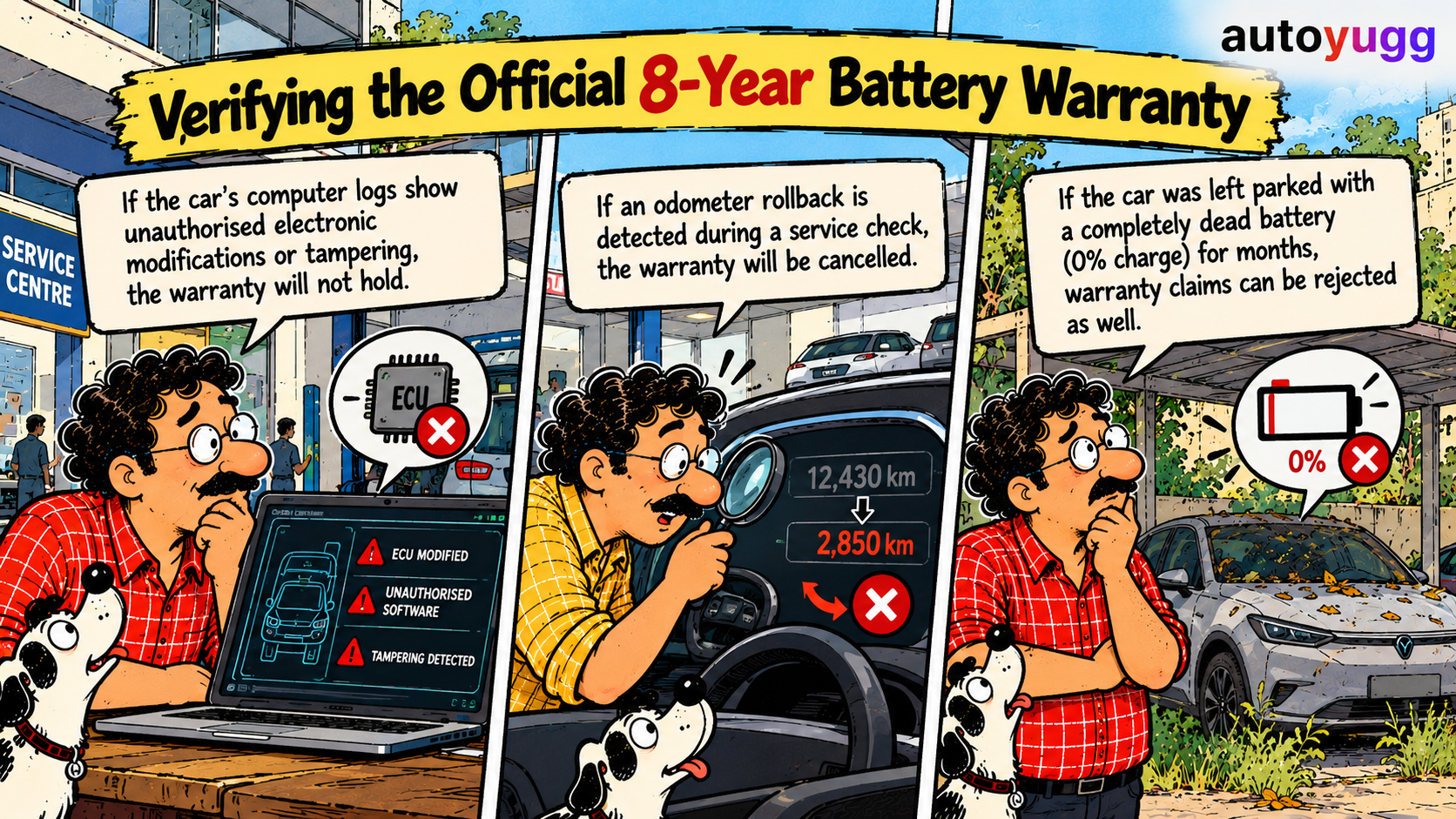
- If the car’s computer logs show unauthorised electronic modifications or tampering, the warranty will not hold.
- If an odometer rollback is detected during a service check, the warranty will be cancelled.
- If the car was left parked with a completely dead battery (0% charge) for months, warranty claims can be rejected as well.
An OBD scan gives all the proof you need. It ensures the car’s computers are clean, the mileage is genuine, and the warranty remains active.
A Simple Pre-Purchase EV Inspection Checklist
Before you pay up or sign transfer papers for a pre-owned electric vehicle, follow these four practical steps:
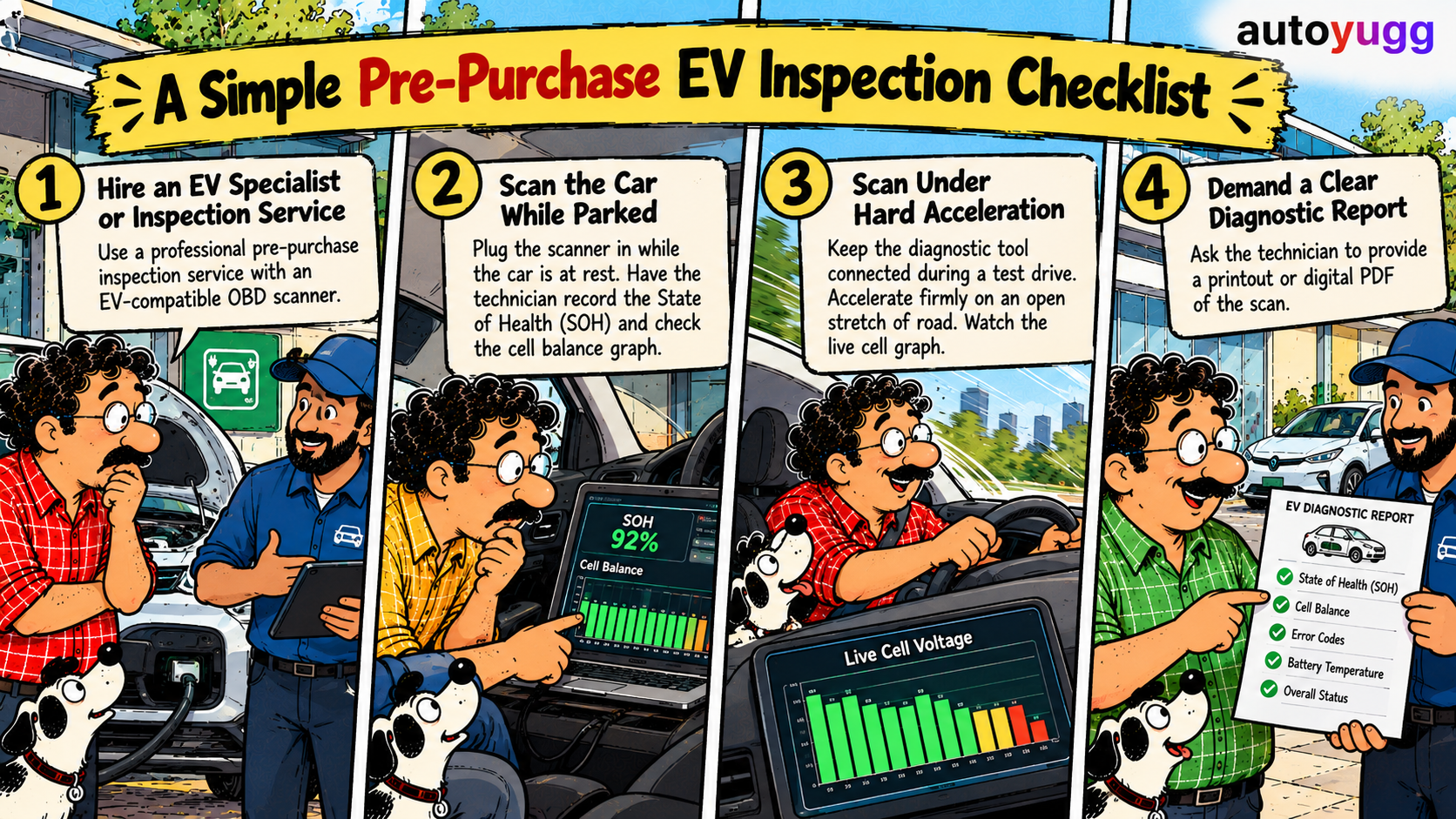
- Hire an EV Specialist or Inspection Service: Use a professional pre-purchase vehicle inspection service available with an EV-compatible OBD scanner.
- Scan the Car While Parked: Plug the scanner in while the car is at rest. Have the technician record the State of Health (SOH) and check the cell balance graph.
- Scan Under Hard Acceleration: Keep the diagnostic tool connected while taking the car out for a test drive. Accelerate firmly on an open stretch of road. Watch the live cell graph.
- Demand a Clear Diagnostic Report: Ask the technician to provide a printout or digital PDF of the scan.
Buying a pre-owned electric car is no doubt a financially viable way to enjoy modern, affordable personal mobility. However, because you cannot inspect an electric battery’s condition with your eyes or ears, the OBD port is your only window into knowing the vehicle’s true condition.