A practical guide to protecting your vehicle from waterlogging, hydrostatic lock and out-of-pocket repair bills during the Indian monsoon season.
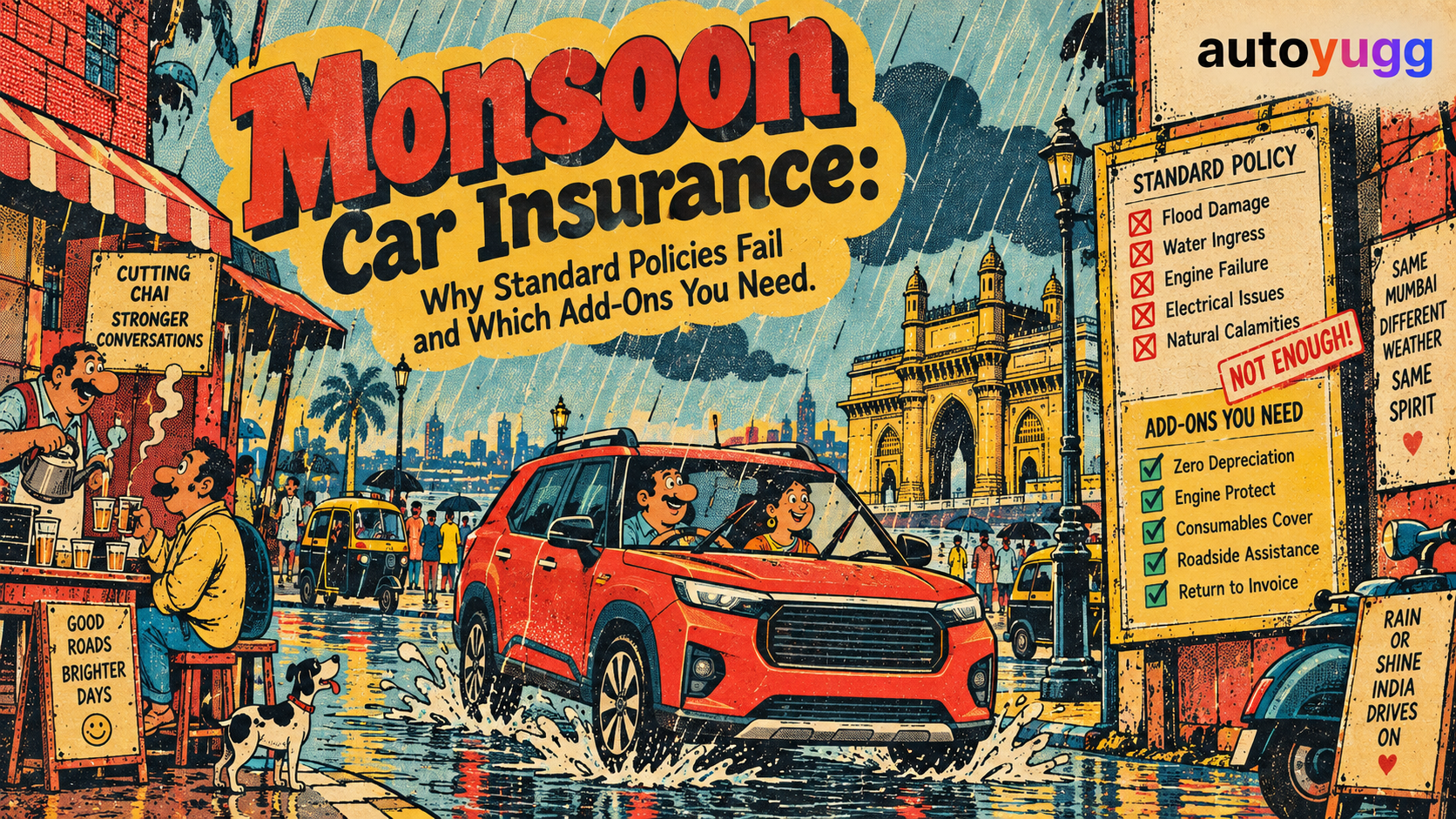
Every monsoon, arterial roads and low-lying underpasses across Mumbai, Bengaluru, Chennai and Delhi-NCR transform into urban canals, leaving thousands of vehicles partially or fully submerged. While most motorists assume their standard comprehensive policy covers all monsoon damage, insurers often reject water-damaged engine claims under standard “consequential loss” exclusions. To avoid such situations, investing an additional ₹2,500 to ₹5,500 in targeted monsoon add-on covers can help to cover water-damage claims.
Why Standard Insurance Rejects Flood Damage
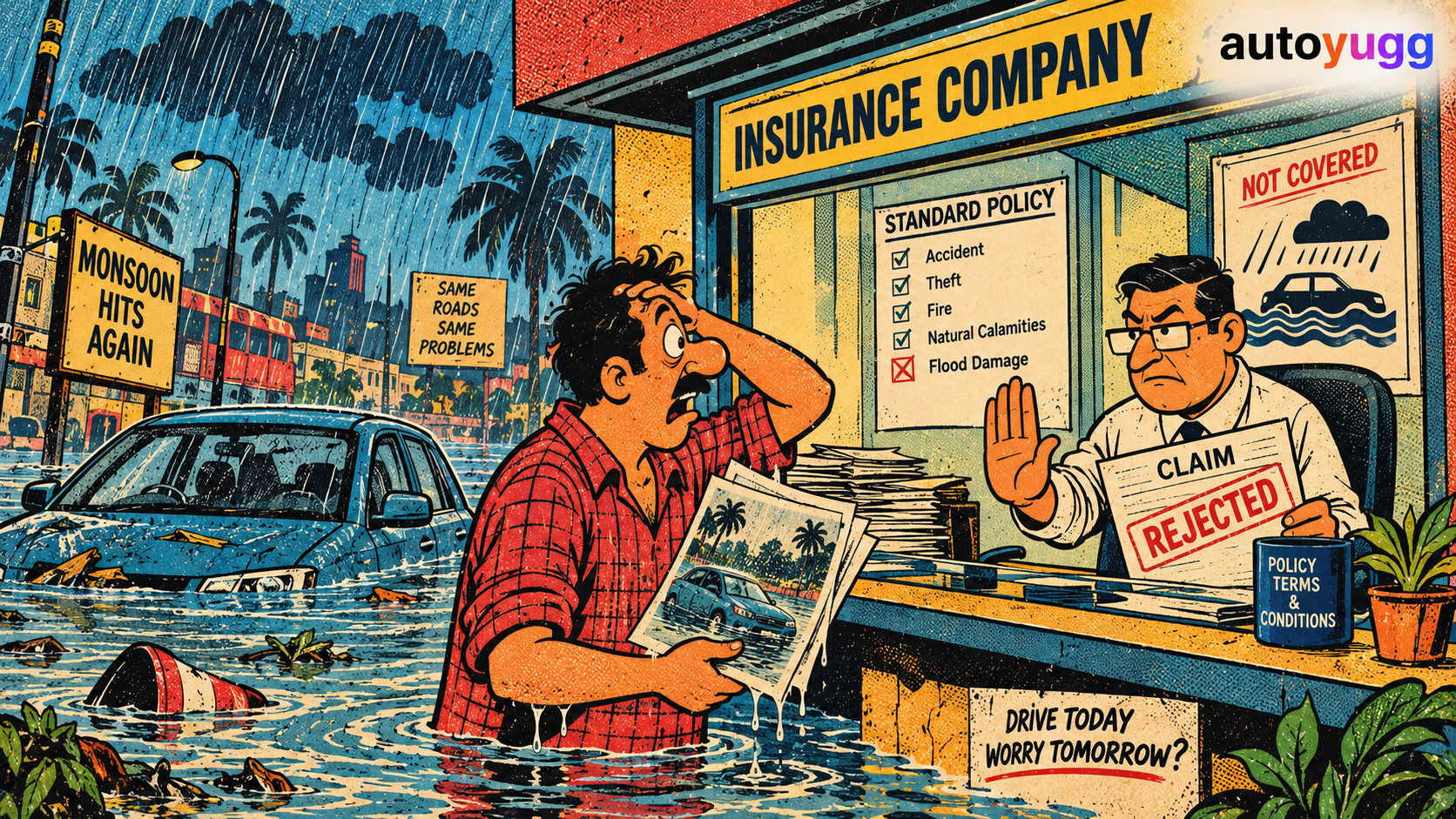
Regular car insurance covers loss or damage caused by natural calamities like floods, storms and inundation under its “Own Damage” component. However, this coverage is only for stationary vehicles that suffer direct damage from rising water levels, such as soaked upholstery, corroded door pads or damaged exterior panels. The policy contract mentions a strict clause that excludes consequential damage, or rather, damage that occurs as a secondary result of human action rather than the natural calamity itself.
When an engine stalls in waterlogged conditions and the driver turns the ignition key to restart it, water is sucked into the engine cylinders through the air intake manifold. Because water cannot be compressed like air and fuel, the moving pistons collide with the incompressible liquid, instantly bending the connecting rods and cracking the engine block. Insurers consider this mechanical failure, known as hydrostatic lock, as driver negligence more than direct flood damage. So, they refuse to provide engine coverage under a standard policy.
Must-Have Monsoon Add-On Covers Compared
The difference between a standard insurance policy and complete monsoon protection falls upon four specific add-on riders that address water ingress, mechanical failure and plastic depreciation.
| Add-On Cover | Protection Provided | Risk Without Add-On | Average Annual Cost |
| Engine Protect / Hydrostatic Lock | Covers internal engine parts, gearbox and differential caused by water ingress. | Claim rejected under consequential loss; repair bills are from ₹1.5 lakh to over ₹4 lakh. | ₹1,200 to ₹2,500 |
| Zero Depreciation (Bumper-to-Bumper) | Pays 100% replacement cost for rubber, nylon, plastic and fibreglass components without depreciation cuts. | Insurer pays only 50% on plastic bumpers, rubber hoses and wiring harnesses, so the owner has to fund the rest. | ₹1,500 to ₹3,500 |
| Consumables Cover | Pays for single-use items replaced during flood repairs, including engine oil, gear oil, coolants and AC gas. | Consumables are removed from the claim payout, adding ₹4,000 to ₹10,000 to the owner’s out-of-pocket bill. | ₹500 to ₹900 |
| Roadside Assistance (RSA) with Flatbed | Covers breakdown towing from waterlogged areas using flatbed trucks to an authorised workshop. | Self-funded towing costs ₹2,500 to ₹6,000; conventional towing can damage automatic or AWD drivetrains. | ₹800 to ₹1,200 |
Note: If you combine Engine Protect with a Zero Depreciation add-on, it can cover up to 95% of total workshop repair costs following severe waterlogging.
A standard claim will deduct 50% for every plastic splash guard, rubber hose and wiring loom replaced, while charging the customer entirely for fresh engine lubricants and coolants. Pairing Zero Depreciation with Consumables cover, however, ensures that workshop bills for fluid flushes, oil replacements and panel fittings are settled in full by the insurer.
Real-World Water Depths: When Driving Becomes Dangerous
Understanding physical water levels against the vehicle’s bodywork also helps drivers judge whether to proceed or stop before water enters critical intake components.
| Water Level Relative to Vehicle | Physical Water Depth | Impact on Vehicle Components | Action Required |
| Below Wheel Rim (Ankle Depth) | Under 100 mm | Safe for passage; tyres displace surface water cleanly without splashing vital mechanical parts. | Drive at a steady low speed in first gear; keep engine revs above 2,000 rpm. |
| At Wheel Hub Centre (Mid-Calf Depth) |
150 mm to 200 mm | Water reaches brake discs, lower suspension joints and low-slung exhaust pipe exits. | Proceed with extreme caution; avoid creating a bow wave that pushes water into the grille. |
| At Door Sill / Lower Bumper (Knee Depth) | 250 mm to 350 mm | Water enters cabin floorboards and submerges the central airbag ECU. | Stop immediately; do not drive through; turn off the engine before water enters the intake duct. |
| Above Headlight Level (Waist Depth) | Over 500 mm | Complete engine submersion, hydrostatic lock and battery harness short circuits occur. | Evacuate vehicle immediately; disconnect battery terminal if safe; prepare for total loss assessment. |
Note: When standing water reaches the centre of the wheel hub, i.e., roughly 180 mm from the ground, water is high enough to enter the air intake of most hatchbacks and low-slung sedans if an aggressive bow wave is pushed upward through the grille.
Electric Vehicles and Flood Ingress: The IP67 Myth
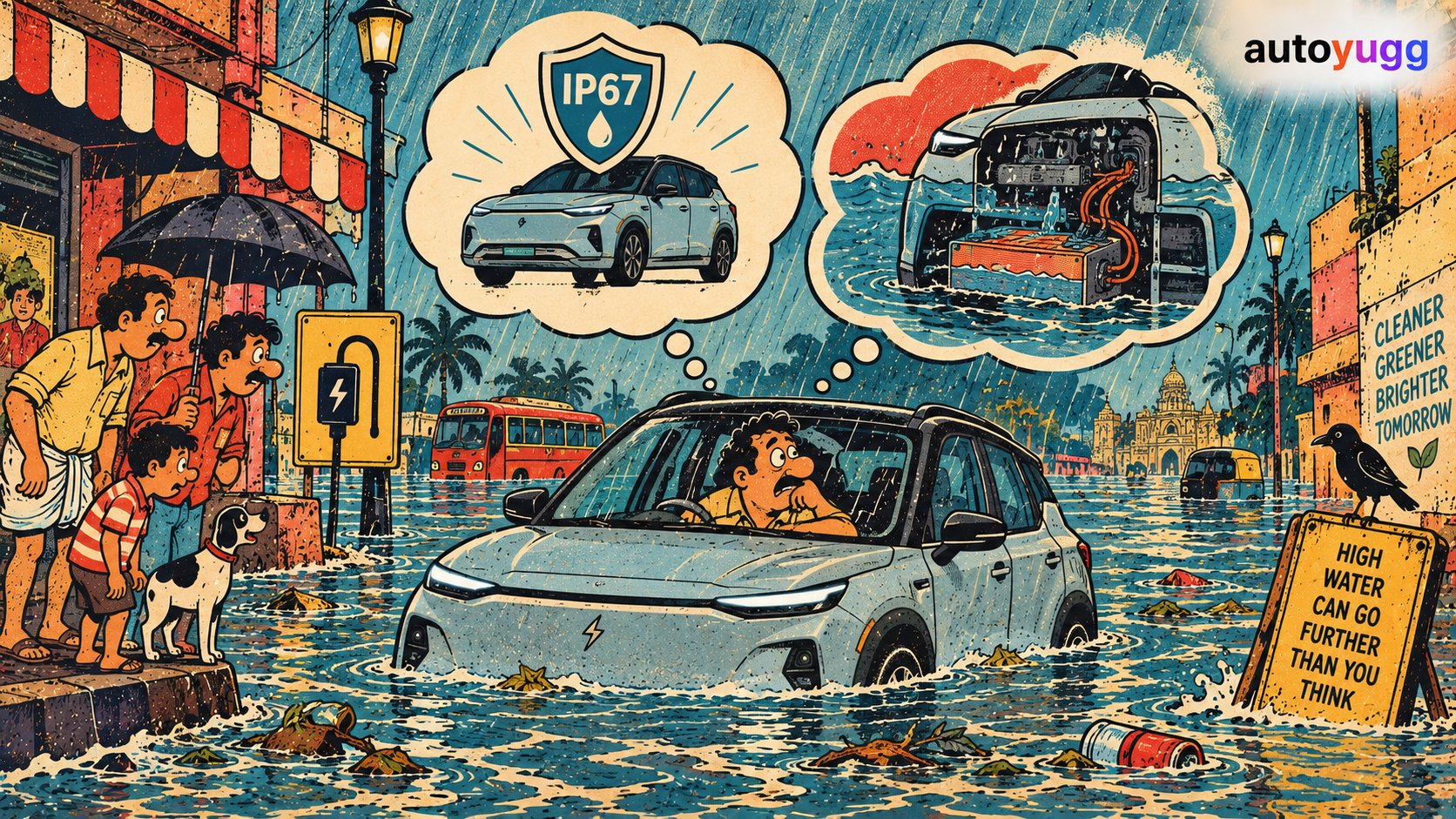
Many electric vehicle owners believe that an IP67-rated battery pack makes their vehicle immune to monsoon flooding. An IP67 certification only makes sure that the high-voltage battery casing resists water ingress when submerged under 1 metre of static water for up to 30 minutes. It cannot withstand prolonged standing water when a vehicle is trapped in a basement car park for 12 to 24 hours.
While the central traction battery is sealed, electric vehicles feature extensive low-voltage wiring looms, cooling pumps, power distribution units and charging sockets located in the lower chassis. Floodwater carries silt and acidic road chemicals that degrade rubber seals and electrical connector pins found here, triggering ground-fault errors. Replacing a compromised EV battery assembly can cost between ₹4.5 lakh and ₹8 lakh, which is why specialised EV battery insurance add-ons are considered essential for zero-emission commuters.
What to Do If Your Vehicle Is Trapped in Floodwater
Keep these things in mind if your vehicle is trapped in still water to make your insurance claims as valid as possible.
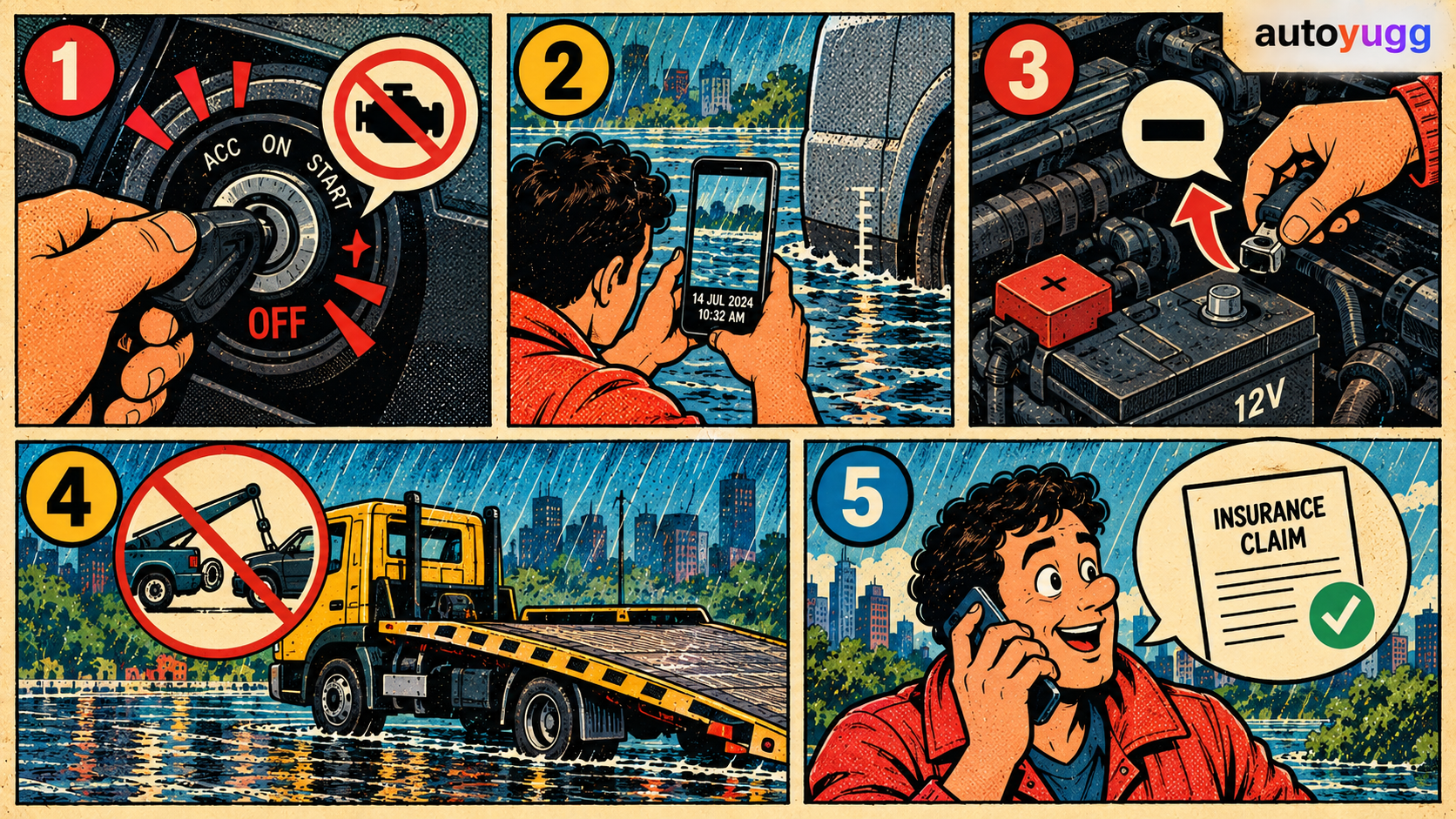
- If the vehicle cuts out while wading through water, leave the ignition completely off. Cranking the motor creates hydrostatic lock.
- Take clear, timestamped photographs showing the exterior water level against the tyres and doors. It proves the vehicle was stationary when floodwaters rose.
- If it is safe to open the bonnet, disconnect the negative terminal of the 12V auxiliary battery. It cuts power to the wiring harness, preventing short circuits.
- Insist that the roadside assistance team sends a flatbed truck rather than a wheel-lift tow crane. Towing an EV with its drive wheels rolling on the road can destroy the transmission or inverter.
- Notify the insurance provider quickly to open an official claim file.
Upfront Cost vs Out-of-Pocket Flood Repair Bills
Here’s how much you may have to pay while repairing your monsoon-damaged vehicle if you do not have Engine Protect add-ons in your insurance.
| Repair Component | Without Monsoon Add-Ons (Standard Policy) | With Engine Protect and Zero Dep Add-Ons |
| Complete Engine Block and Piston Rebuild | ₹1,80,000 (Claim Rejected) | ₹0 (Covered by Engine Protect) |
| Cabin Carpet, Foam and Floorboard Wiring | ₹12,500 (50% Depreciation on Plastics/Rubber) | ₹0 (100% Covered by Zero Dep) |
| Engine Oil, Coolant and Refrigerant Flush | ₹8,500 (Owner Pays 100%) | ₹0 (Covered by Consumables) |
| Flatbed Towing Charge | ₹4,000 (Owner Pays 100%) | ₹0 (Covered by Roadside Assistance) |
| Mandatory Policy Deductible | ₹1,000 to ₹2,000 (Owner Pays) | ₹1,000 to ₹2,000 (Owner Pays) |
| Total Estimated Out-of-Pocket Expense | ₹2,06,000 to ₹2,07,000 | ₹1,000 to ₹2,000 |
Note: The mentioned bills are indicative; real-world repair charges may cost more or less, depending on the situation.
Why Getting an Add-On for Monsoon Car Insurance Matters
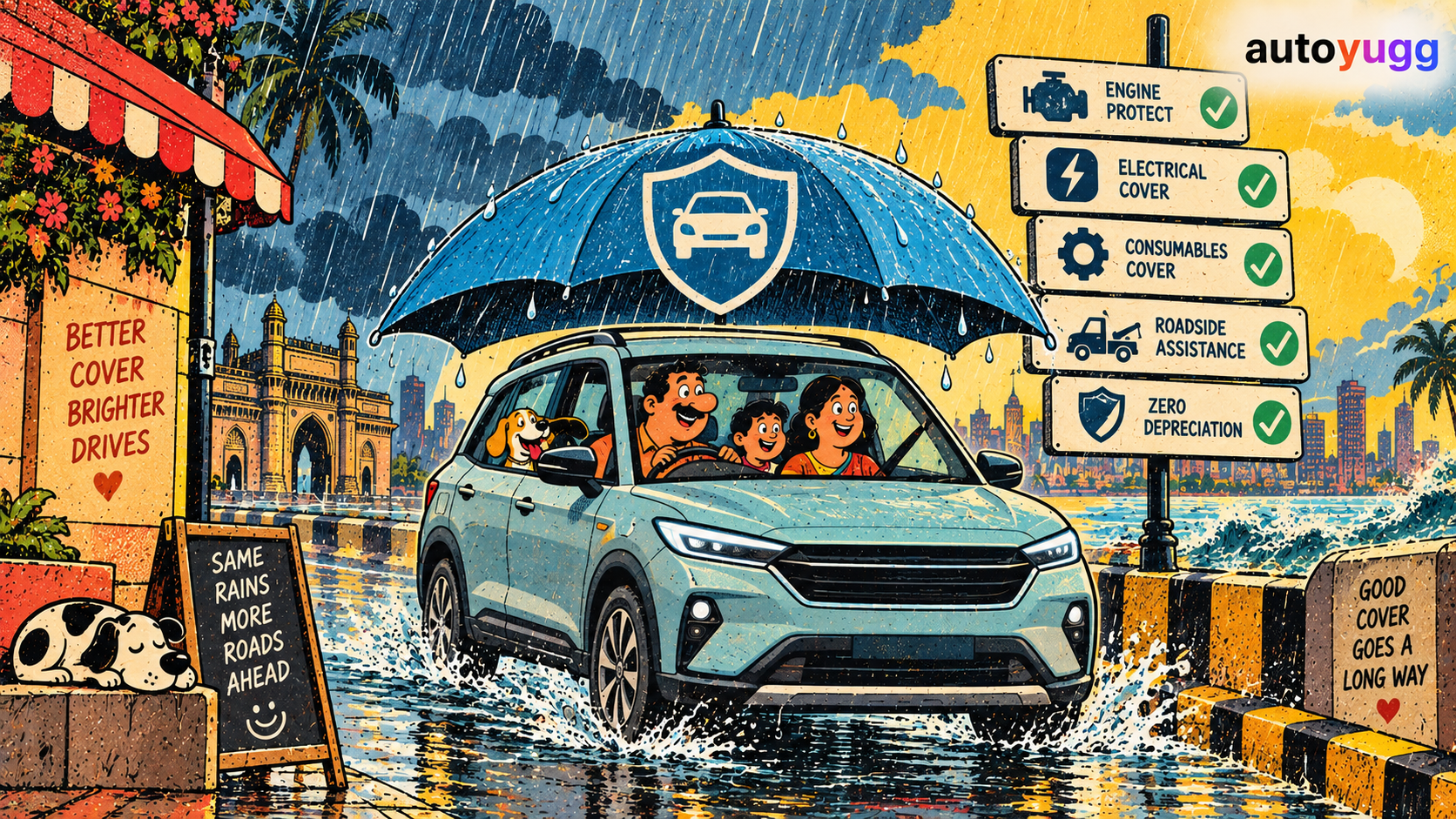
A minor mechanical stall in waterlogged conditions can generate unusually high repair bills for a car owner. At the same time, paying ₹3,500 to ₹5,000 annually for some add-ons covers financial liabilities that would otherwise equal 25% to 40% of the vehicle’s market value, which the owner would have to cover. Therefore, it is wise to review one’s insurance policy documents well before the monsoon arrives in their region. Adding Engine Protect, Zero Depreciation, Consumables and Roadside Assistance turns a standard policy into a financial shield against waterlogging damage.