A factual breakdown of Hyundai’s Battery-as-a-Service model, how much you save upfront, per-kilometre rental charges and total cost of ownership against outright purchase.
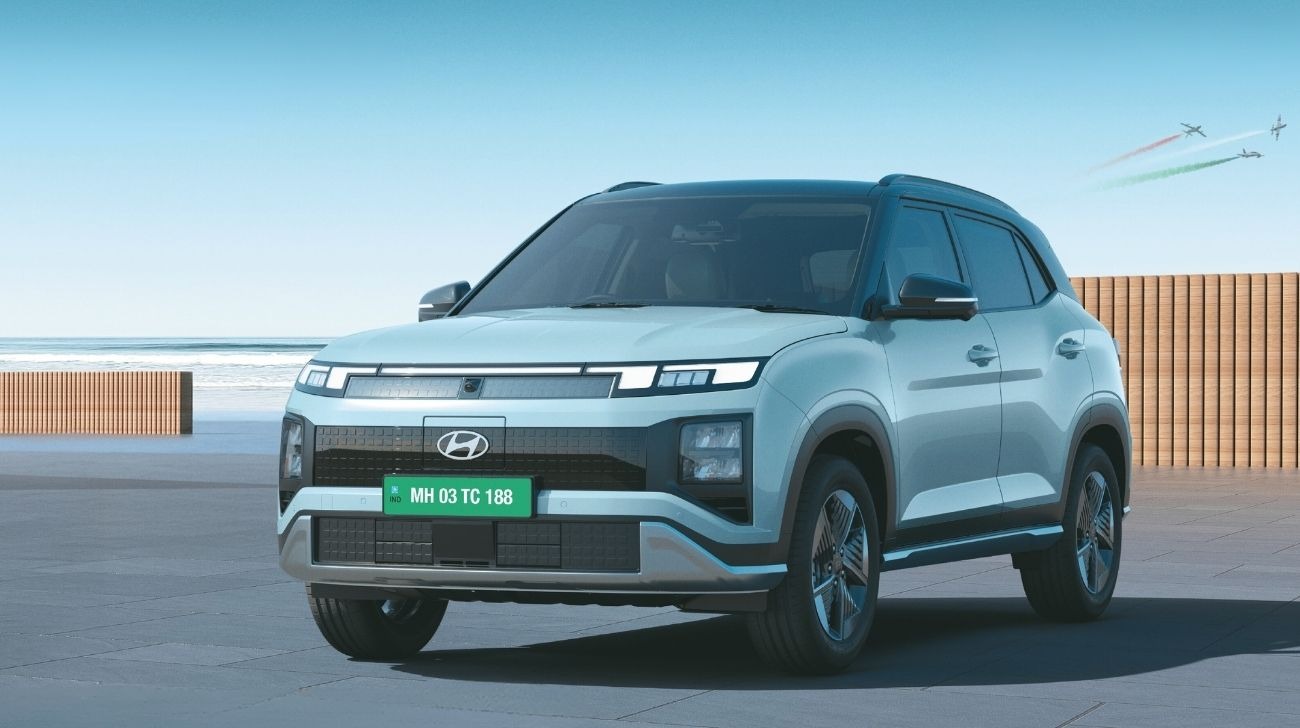
Hyundai Motor India’s Battery-as-a-Service (BaaS) ownership program for its Creta Electric model reduces the EV’s entry showroom price from ₹18.03 lakh to ₹10.99 lakh. Buyers with strict initial budgets and those who keep their driving to under 1,200 kilometres a month will find the lower showroom ticket and reduced initial loan commitments appealing. At the same time, high-mileage drivers covering over 1,800 kilometres monthly will have to deal with ongoing per-kilometre battery fees, which can reduce the Creta Electric’s long-term running cost advantages. We have provided a detailed review of the BaaS program to help you decide whether it’s practical for you or not.
How Hyundai Creta Electric’s BaaS Structure Applies
Let’s take a look at the difference between standard retail purchasing and the BaaS option of the Hyundai Creta Electric.
| Ownership Parameter | Standard Outright Purchase | Creta Electric BaaS Model |
| Ex-Showroom Entry Price | ₹18.03 Lakh | ₹10.99 Lakh |
| Upfront Capital Difference | Baseline (Full Vehicle Invoice) | ₹7.04 Lakh upfront reduction |
| Battery Payment Method | Integrated into vehicle loan or cash | Usage fee starting at ₹3.90 per km |
| Additional Energy Expense | Domestic or commercial electricity | Domestic or commercial electricity |
| High-Voltage Battery Warranty | 8 Years / 1,60,000 km | 8 Years / 1,60,000 km (monitored by OEM) |
| Effective Operational Cost | Approx ₹1.15 to ₹1.25 per km | Approx ₹5.05 to ₹5.15 per km |
Note: The BaaS structure drops the Creta Electric’s price by ₹7.04 lakh and brings its ex-showroom price in line with mid-spec petrol SUV names.
Under the BaaS program, Hyundai invoices the vehicle body, chassis and interior separately from the traction battery. The buyer finances or purchases the rolling vehicle at ₹10.99 lakh, while the high-voltage battery is covered through an institutional financing and subscription agreement with partner lenders. The battery rental is then charged continuously starting at ₹3.90 per kilometre driven, and billed monthly according to odometer telemetry or financing slabs. Hyundai takes responsibility for monitoring cell health and honours the standard 8-year or 1,60,000-kilometre warranty. If the battery capacity drops alarmingly, the brand replaces or services the pack.
Upfront Savings vs Running Costs of the Hyundai Electric BaaS
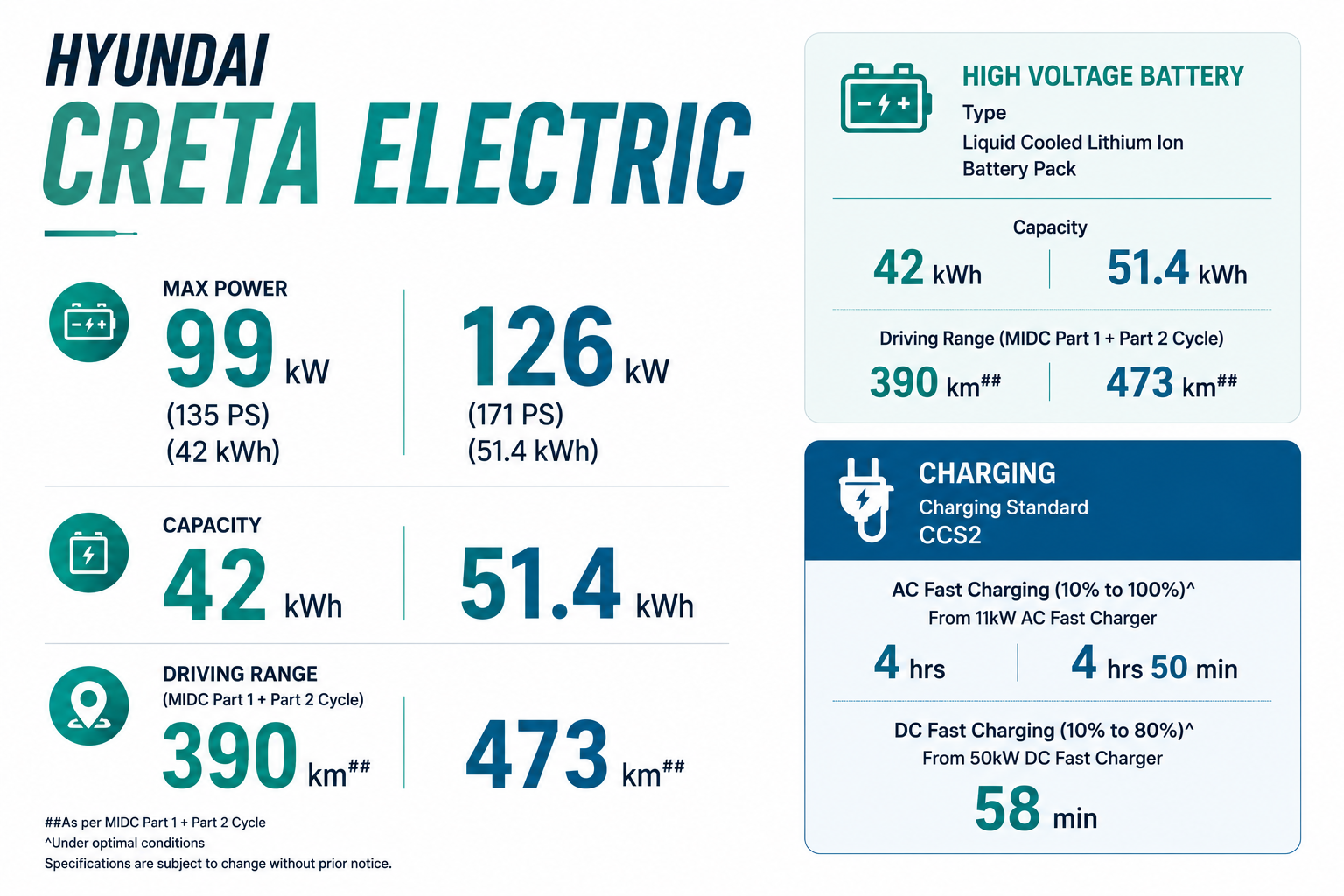
To find out the actual operating expenses, we need to combine the electricity needed for charging the battery cells with the ₹3.90 per kilometre battery rental fee.
| Monthly Distance Driven | Battery Fee (at ₹3.90/km) | Power Cost (at ₹1.20/km) | Total BaaS Monthly Bill | Outright EV Bill (Power Only) | Petrol Creta Bill (at ₹7.50/km) |
| 500 km | ₹1,950 | ₹600 | ₹2,550 | ₹600 | ₹3,750 |
| 1,000 km | ₹3,900 | ₹1,200 | ₹5,100 | ₹1,200 | ₹7,500 |
| 1,500 km | ₹5,850 | ₹1,800 | ₹7,650 | ₹1,800 | ₹11,250 |
| 2,000 km | ₹7,800 | ₹2,400 | ₹10,200 | ₹2,400 | ₹15,000 |
Note: With the mandatory ₹3.90 per kilometre battery fee, the Creta Electric’s running cost is roughly ₹5.10 per kilometre. It’s as expensive to operate as a factory CNG or strong-hybrid vehicle.
Charging the Creta Electric at home using a 15A socket or 7.4 kW AC wallbox at ₹8 per unit means an electricity cost of roughly ₹1.20 per kilometre. For an owner who bought the SUV directly, that ₹1.20 is their entire operational fuel bill. But under BaaS, adding the ₹3.90 per kilometre rental fee brings the combined running cost to approximately ₹5.10 per kilometre.
Also, over a distance of 1,00,000 kilometres, a BaaS customer pays ₹3.90 lakh in battery fees alone, on top of vehicle loan EMIs and electricity bills. Note that this running cost is roughly 30 per cent cheaper than a standard 1.5L petrol Creta, but it doesn’t offer much over an outright EV purchase.
Resale, Foreclosure and Ownership Under the BaaS Program
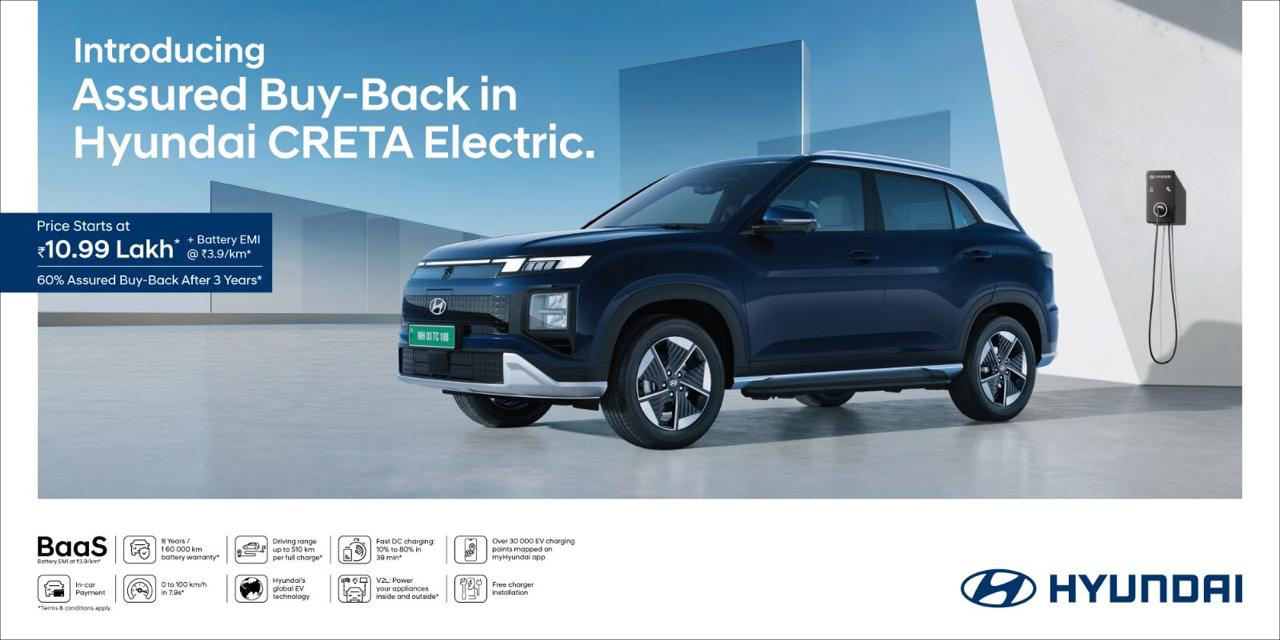
If one’s selling a BaaS-registered Creta Electric, the secondary buyer will have to qualify for and accept the ongoing battery contract or demands. Alternatively, they may compel the seller to pay the full battery value before making the sale.
In a standard vehicle sale, clearing the single bank hypothecation releases the registration certificate (RC) for immediate transfer. But with BaaS, the buyer must be approved by the partner financier to take over the monthly per-kilometre billing agreement, or the original owner must pay off the remaining amount to turn the vehicle into a standard outright asset.
AutoYugg Verdict: Is the Hyundai Creta Electric BaaS Worth It?
For buyers looking to reduce the upfront cost of EV ownership, the Hyundai Creta Electric BaaS makes a compelling case. The BaaS option brings the starting ex-showroom price down to ₹10.99 lakh, ₹7.04 lakh lower than the ₹18.03 lakh starting price of the standard model. However, the lower purchase price comes with an ongoing battery EMI that Hyundai quotes at starting from ₹3.90 per kilometre.
This is the key calculation buyers need to consider: at ₹3.90 per km, the battery payments alone would add up to ₹3.90 lakh over 1,00,000km and ₹7.80 lakh over 2,00,000km. In other words, the ₹7.04 lakh upfront saving and the ongoing battery payments need to be looked at together when assessing the value of BaaS.
For buyers with limited upfront funds who drive moderate distances, BaaS can make the Creta Electric more accessible while reducing the initial vehicle financing requirement. However, buyers planning to cover very high mileage or keep the SUV for several years should compare the total cost of BaaS with that of an outright purchase before making a decision.
The BaaS option therefore isn’t necessarily about making the Creta Electric cheaper to own. Its biggest advantage is lowering the initial cost of entry into EV ownership. Whether it delivers better overall value will depend on the buyer’s mileage, ownership period, applicable battery-financing terms and electricity costs.
Choose BaaS if reducing the upfront purchase price is your priority. If you have the funds to buy the car outright, compare the total cost over your expected ownership period before deciding.