A detailed comparison guide between the MG Hector Tomahawk PHEV and Toyota Innova Hycross
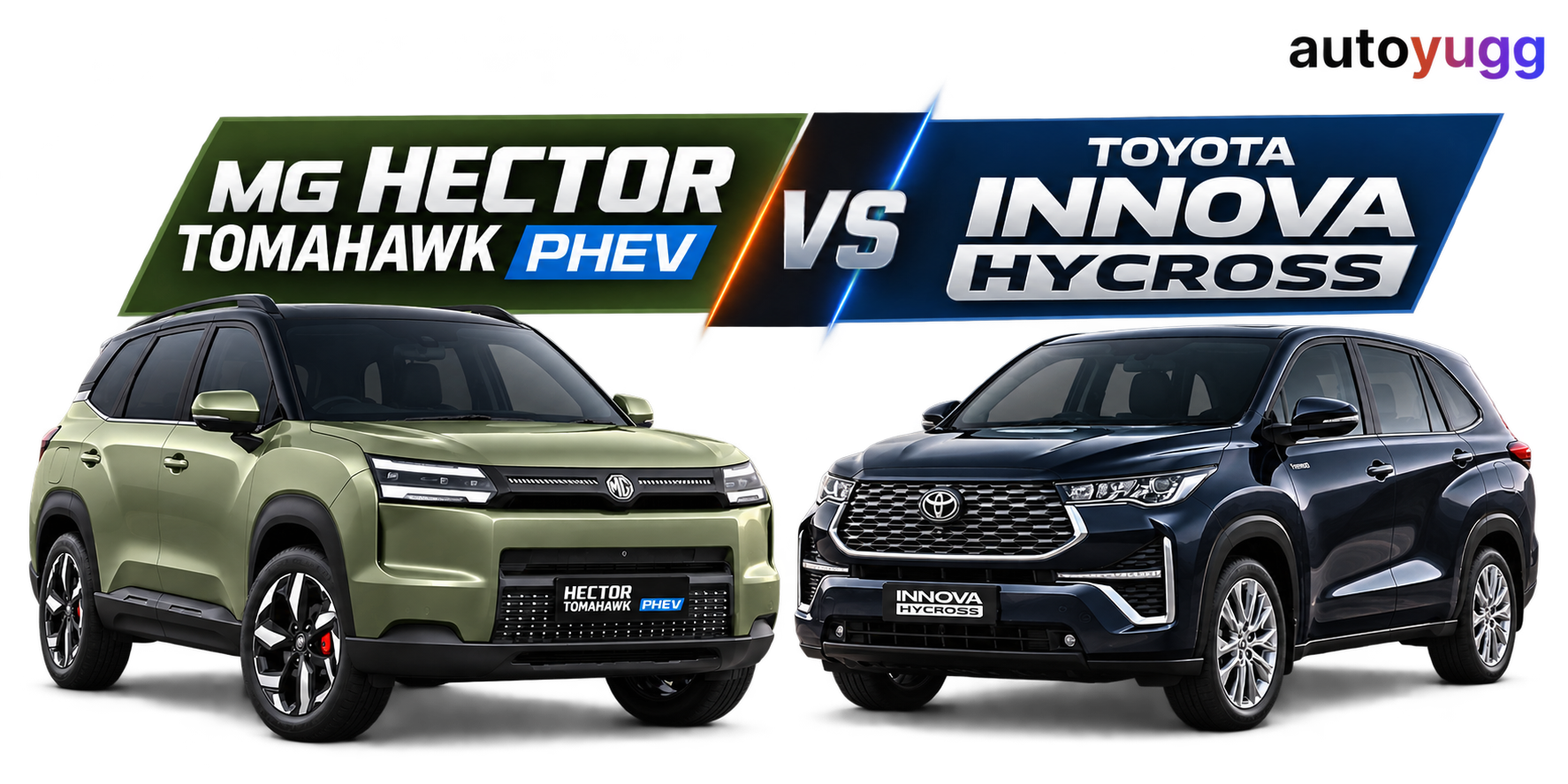
MG Motors has recently launched a new model called the Hector Tomahawk PHEV. It is the first plug-in hybrid for India available exclusively in a 7-seater layout, and it positions itself against another established nameplate in the space, the Toyota Innova Hycross Hybrid.
If families want long-distance cruising comfort combined with modern electrification, both vehicles offer compelling yet very different hybrid powertrain strategies. We take a closer look at their pricing, dimensions, daily efficiency, features, safety equipment and real-world driving feel in this comparison piece.
Dimensions and Design
Lengthwise, both hybrids are almost similar, with the Hycross effectively being about 10 mm longer than the Tomahawk. But the Hycross has a lower ground clearance of 185 mm, compared to the Tomahawk’s 230 mm.
| Dimension | MG Hector Tomahawk PHEV | Toyota Innova Hycross Hybrid |
| Length | 4,745 mm | 4,755 mm |
| Width | 1,850 mm | 1,850 mm |
| Height | 1,770 mm | 1,795 mm |
| Wheelbase | 2,810 mm | 2,850 mm |
| Ground Clearance (Unladen) | 230 mm | 185 mm |
| Boot Space (All seats upright) | 192 litres | 300 litres |
At a glance: You get a slightly more spacious third row inside the Hycross, along with much higher boot space of 300 litres.
How the Two Look Different
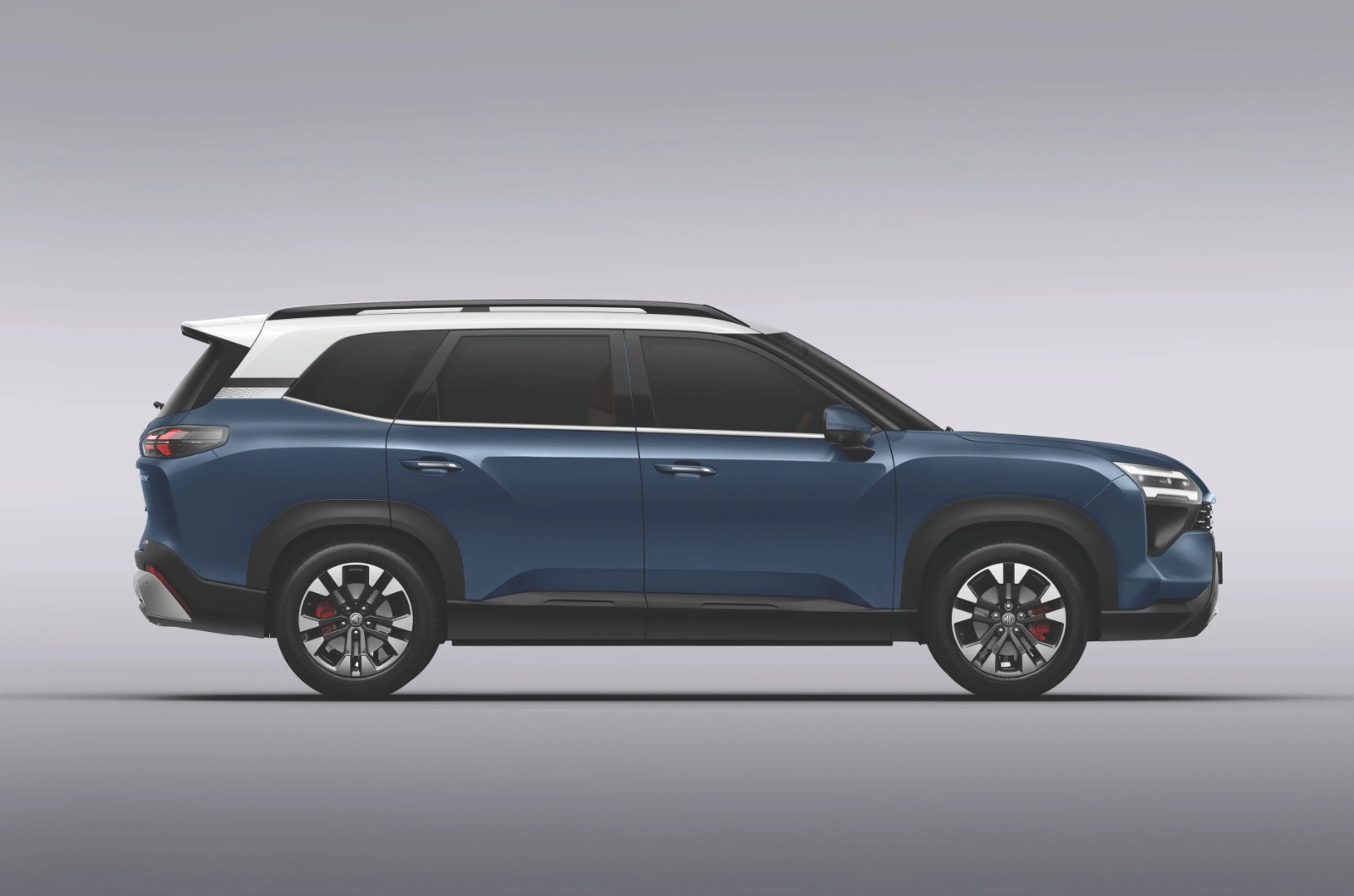
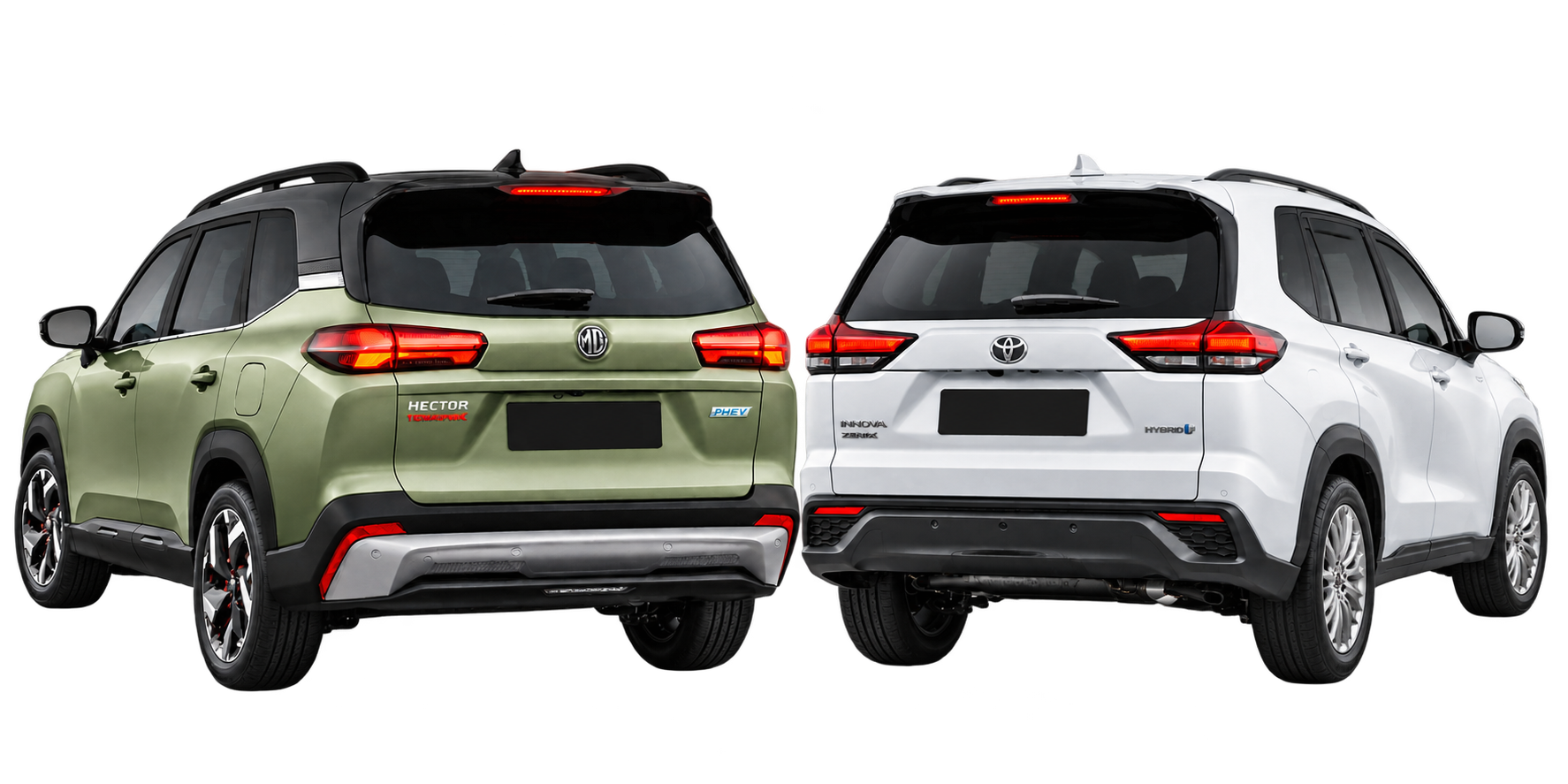
The MG Hector Tomahawk PHEV has a commanding, upright front profile with a prominent grille on the front, featuring subtle chrome details. It uses sleek horizontal LED daytime running lights, a rugged lower bumper, and muscular wheel arches that give the car a strong presence on the road. At the same time, this version doesn’t come with the minimalist front design of its electric sibling. If you want unapologetic, muscular SUV road presence that makes smaller cars yield on highway lanes, the Tomahawk nails the brief. Just keep in mind that its high-set, blunt nose restricts your direct ground view up front, meaning you will lean heavily on the 360-degree camera.
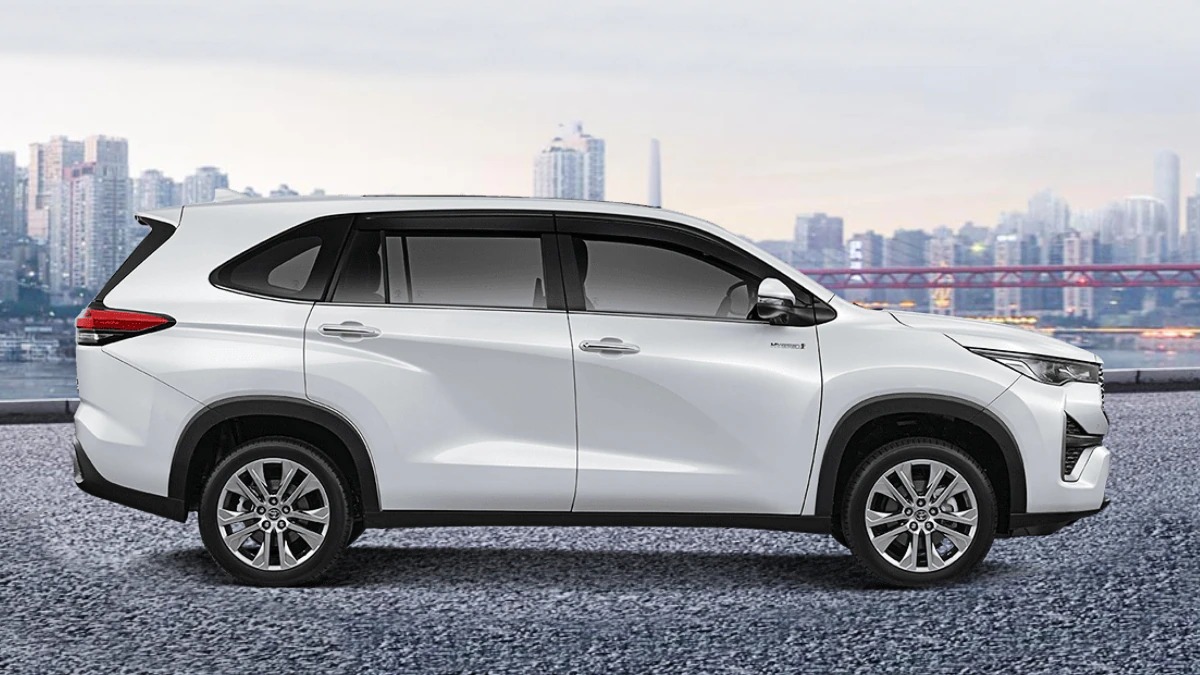
The Toyota Innova Hycross, in contrast, features a high bonnet, a wide front grille and a muscular shoulder line. Although it uses conservative styling elements, the 18-inch alloy wheels and modern LED headlamp housings give this vehicle an imposing appearance, too. However, its wheels appear too small for its body. Also, Toyota gave the front an aggressive nose to help buyers shake off the commercial fleet cab image, but the side profile still reveals its MPV van origins.
Engine and Powertrain Comparison
Let’s take a look at the two cars’ hybrid powertrains. Both offer a petrol engine paired with an electric motor, but the Tomahawk clearly makes better use of the hybrid technology. Its combined driving range reaches up to 1,100 km.
| Specification | MG Hector Tomahawk PHEV | Toyota Innova Hycross Hybrid |
| Engine | 1.5L petrol + electric motor | 2.0L petrol + electric motor |
| Battery capacity | 20.5 kWh | 1.6 kWh (Ni-MH) |
| Power | 198 bhp | 186 bhp |
| Torque | 230 Nm | 188 Nm (engine) + 206 Nm (motor) |
| Electric-only range | 115 km | Minimal |
| Claimed efficiency/range | 1,100 km (combined range) | 23.24 kmpl (ARAI) |
| DC fast charging capacity | 25 kW | N/A |
Range and Cost Per Kilometre
The Hector Tomahawk has a claimed electric-only range of up to 115 km using its 20.5 kWh battery pack. When charged using a standard domestic electricity connection at an average rate of ₹8 per unit (kWh), a full replenishment costs around ₹164. In pure electric driving, it results in an operational running cost of approximately ₹1.40 to ₹1.80 per kilometre.
Meanwhile, the Innova Hycross Hybrid is a self-charging system with a 1.6 kWh battery, meaning it does not support extended electric-only driving from an external plug. It pairs an electric motor with a 2.0L petrol engine to deliver an ARAI-certified fuel efficiency figure of 23.24 kmpl, while mixed real-world driving typically returns between 16 kmpl and 18 kmpl. At a fuel price of ₹100 per litre, the running cost remains steady at roughly ₹5.50 to ₹6.25 per kilometre.
Interior and Features
The Tomahawk has larger digital screens and a 10-speaker Infinity sound system. In contrast, the Hycross offers an 8-seating layout option.
| Feature | MG Hector Tomahawk PHEV | Toyota Innova Hycross Hybrid |
| Touchscreen | 15.6-inch (Essence trim) | 10.1-inch (VX-O trim) |
| Digital instrument cluster | 8.8-inch | 7-inch |
| Climate control | Physical buttons | Physical buttons |
| Wireless connectivity | Yes | Yes |
| Sunroof | Panoramic | Panoramic |
| Audio | 10-speaker Infinity | 9-speaker JBL |
| Ventilated seats | Yes (Front) | Yes (Front) |
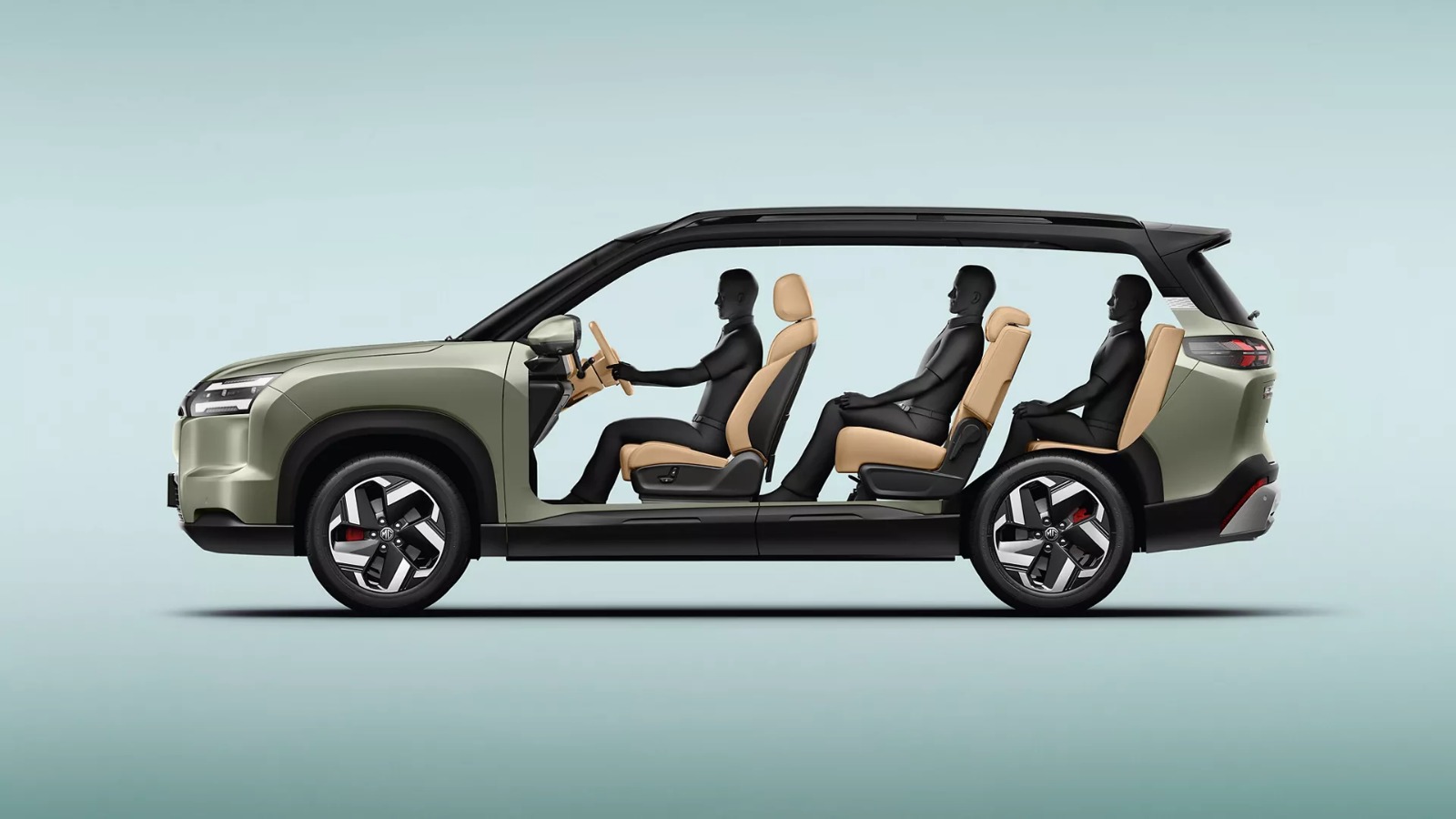
| Seating layout | 7-seater only | 7-seater and 8-seater options |
What Each Hybrid Offers
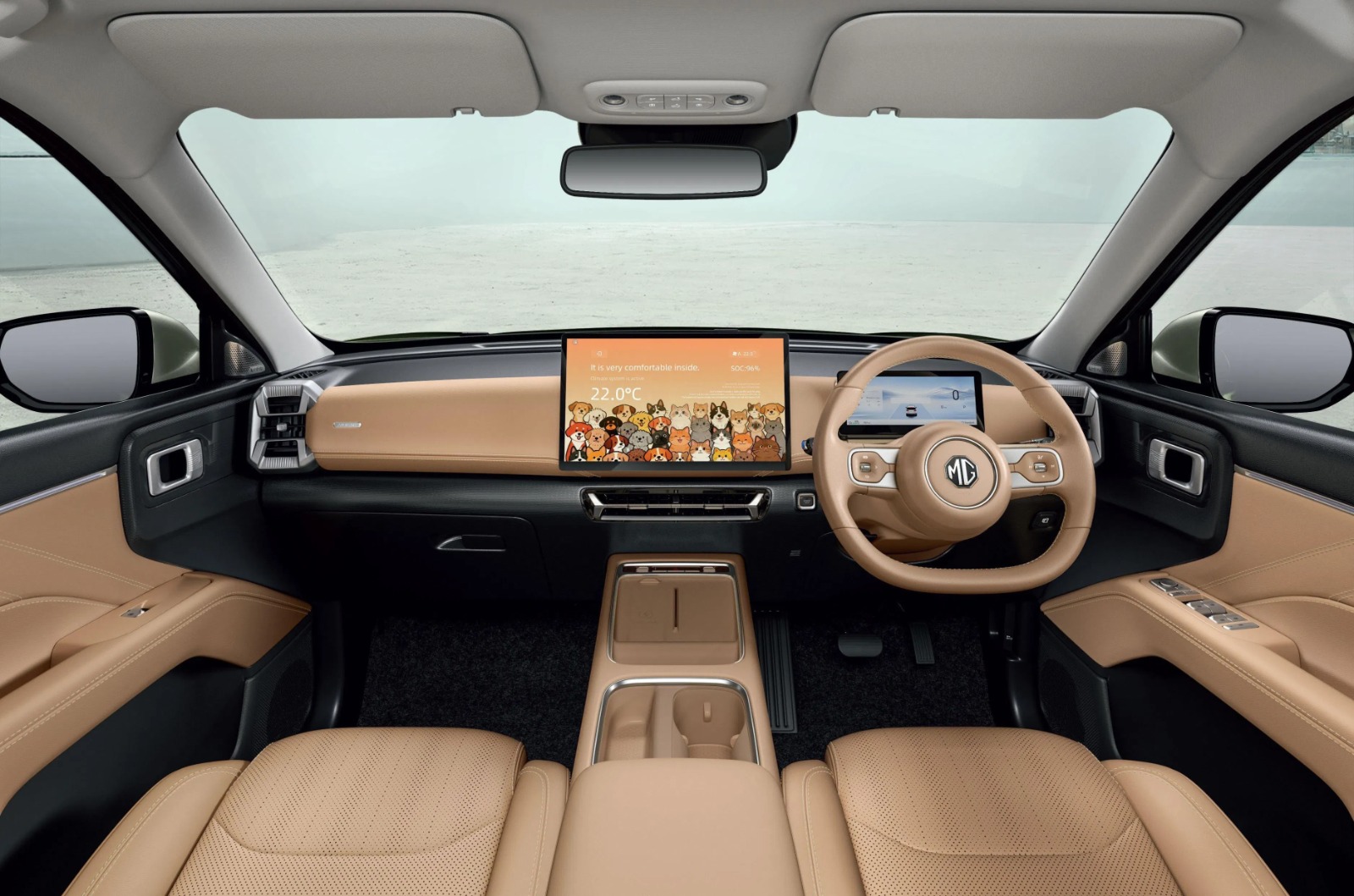
Inside, the Hector Tomahawk has a tech-focused layout with soft-touch materials on key contact points. A portrait-oriented 15.6-inch touchscreen display sits on the dashboard, housing navigation, media, vehicle controls and connected apps. The dual-tone brown and black cabin is available strictly in a 7-seater layout, which limits overall luggage capacity a bit when all three rows are occupied.
The entry Exclusive trim (₹25.69 lakh) offers the 15.6-inch display, digital driver readout, and basic connected-car features. However, the higher Essence trim (₹27.79 lakh) adds features like ventilated front seats, a panoramic sunroof, a powered tailgate, and the 10-speaker Infinity audio setup.
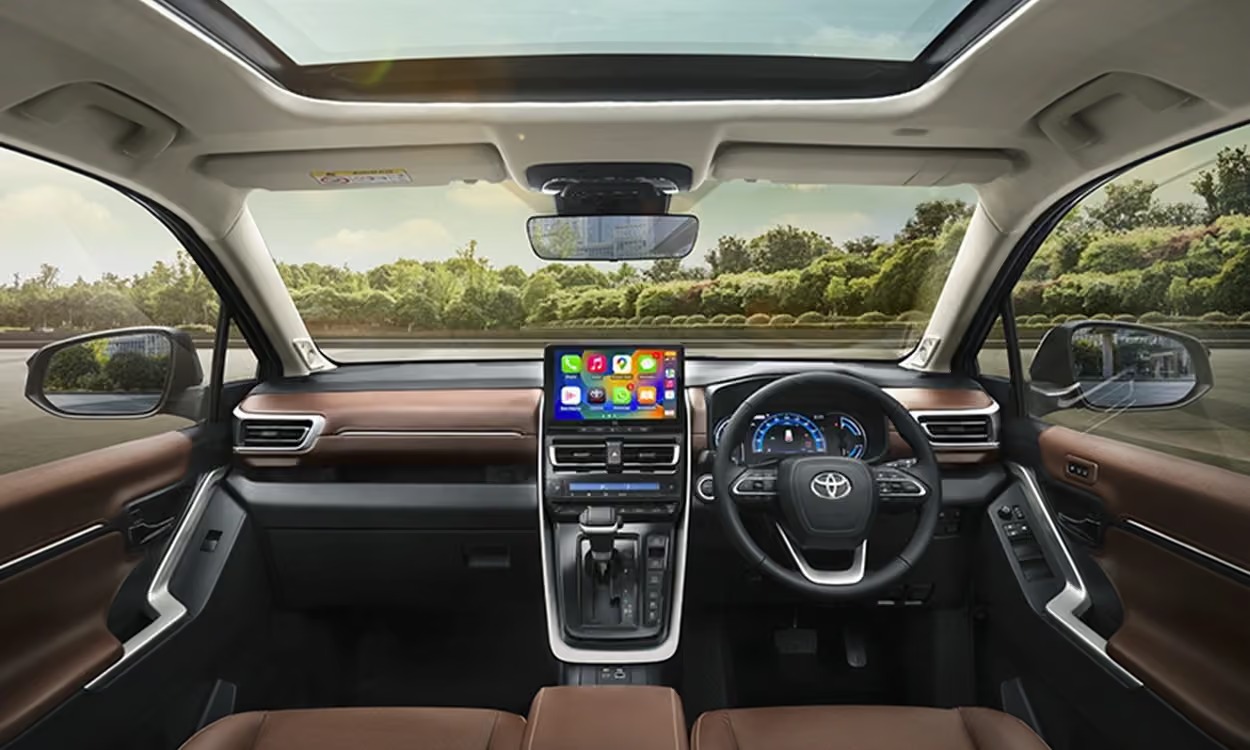
Toyota prioritises straightforward ergonomics and cabin space in the Hycross. The dashboard uses a 10.1-inch landscape display and keeps physical buttons and toggle switches for the dual-zone air-conditioning unit. The vehicle provides 300 litres of boot space with all three rows up, allowing several soft bags to fit behind the third row.
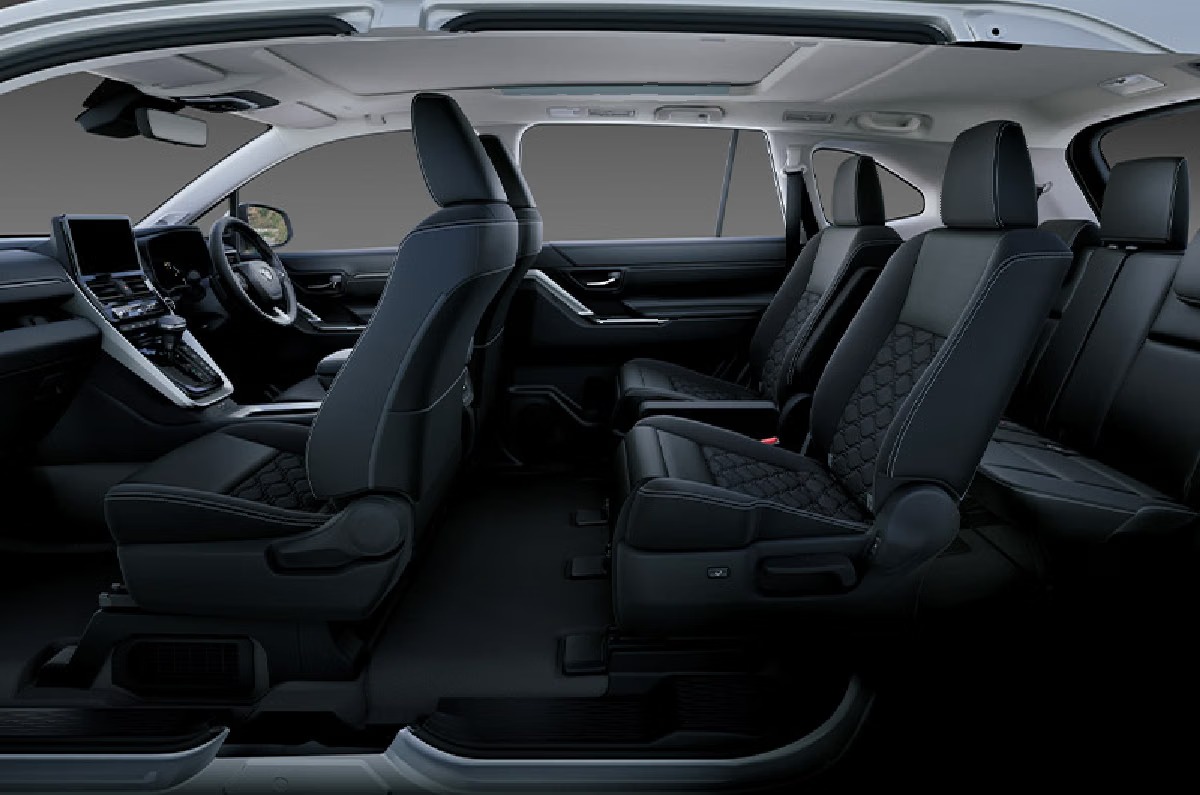
The VX(O) grade adds the larger 10.1-inch touchscreen, wireless Apple CarPlay, a panoramic sunroof and LED fog lamps over the base VX. Buyers who want luxury additions like the electrically adjustable second-row Ottoman seats with powered leg rests, and front-seat ventilation must step up to the ZX (₹31.20 lakh) or ZX(O) (₹31.84 lakh).
Safety
While the Hycross proudly holds a 5-star crash test rating, the Tomahawk is yet to be tested by Bharat NCAP.
| Safety feature | MG Hector Tomahawk PHEV | Toyota Innova Hycross Hybrid |
| Published crash rating | N/A | 5-star Bharat NCAP |
| Airbags | 6 | 6 |
| ESC/ESP | Yes | Yes |
| Blind-spot monitor | Yes | Yes |
| Tyre pressure monitoring | Yes | Yes |
| Level 2 ADAS | Yes | Yes (Toyota Safety Sense) |
| Braking | All-wheel disc brakes | All-wheel disc brakes |
| Parking and Visibility | 360-degree camera | 360-degree camera |
What Stands Out
MG offers a solid safety net with 6 airbags, a high-resolution 360-degree camera system and a comprehensive suite of Level 2 ADAS features like adaptive cruise control and autonomous emergency braking from the Essence trim.
Besides the 5-star-rated crash protection, the Hycross matches the Tomahawk with its own reliable Toyota Safety Sense suite, which has dynamic radar cruise control and auto high beam assist. It also includes 6 airbags and blind-spot monitoring.
Price Comparison
When pitting both nameplates against each other, the Hycross offers more variants than the Tomahawk.
| MG Hector Tomahawk PHEV | Toyota Innova Hycross Hybrid |
| Exclusive 7-Seater: ₹25.69 lakh | VX [7S]: ₹26.76 lakh |
| Essence 7-Seater: ₹27.79 lakh | VX(O) [7S]: ₹28.77 lakh |
| — | ZX: ₹31.20 lakh |
| — | ZX(O) [LE]: ₹32.95 lakh |
MG keeps the Hector Tomahawk PHEV lineup incredibly simple with just two heavily loaded trims for now. Its entry price of ₹25.69 lakh slightly undercuts the base Innova Hycross Hybrid. Meanwhile, Toyota stretches its pricing across multiple variants (13 in total). It starts at ₹26.76 lakh for the VX [7S] and goes all the way up to ₹32.95 lakh for the fully loaded ZX(O) [LE].
If price and range are the two most important factors, then the Tomahawk wins. But if you want a more diverse lineup to choose from, the Hycross is the one.
Conclusion
The MG Hector Tomahawk PHEV is a favourable car if you want silent, zero-emission benefits for daily driving, but keep the petrol engine on standby for weekend trips. It has a highly lucrative package, backed by its tech-heavy cabin, aggressive pricing and massive combined range.
Conversely, the Toyota Innova Hycross Hybrid is for those who frequently travel with six or seven passengers over long distances. It requires no charging infrastructure, offers unmatched rear-seat comfort and delivers high fuel economy without any driving habit adjustments.
Overall, choosing between the two depends on whether you want a modern plug-in experience with the Hector Tomahawk PHEV or dependable, self-charging practicality with the Innova Hycross Hybrid.