A close look at all the improvements surrounding the fifth-generation Ducati.

Introduced in India around August 2026, the Ducati Monster has replaced its 937cc Testastretta platform with an entirely fresh 890cc V2 engine. It has given up older desmodromic valve actuation for modern spring-loaded valves, and has also dropped some considerable weight compared to its earlier model.
Key Takeaways
- The new 890cc V2 engine develops 111 bhp and 91.1 Nm of peak torque.
- A kerb weight of 184 kg now makes it 4 kg lighter than the previous generation.
- The electronics suite now gets a larger 5-inch TFT display and Ducati Quick Shift 2.0.
The 2026 version of the Monster attempts to make daily street usability as convenient as possible, but it also keeps its older canyon-cruising abilities alive. And with ex-showroom prices starting at ₹ 13.99 lakh, we have mentioned here what exactly comes new on this Italian naked sports bike.
A Brand-New Beating Heart: The 890cc V2 Engine
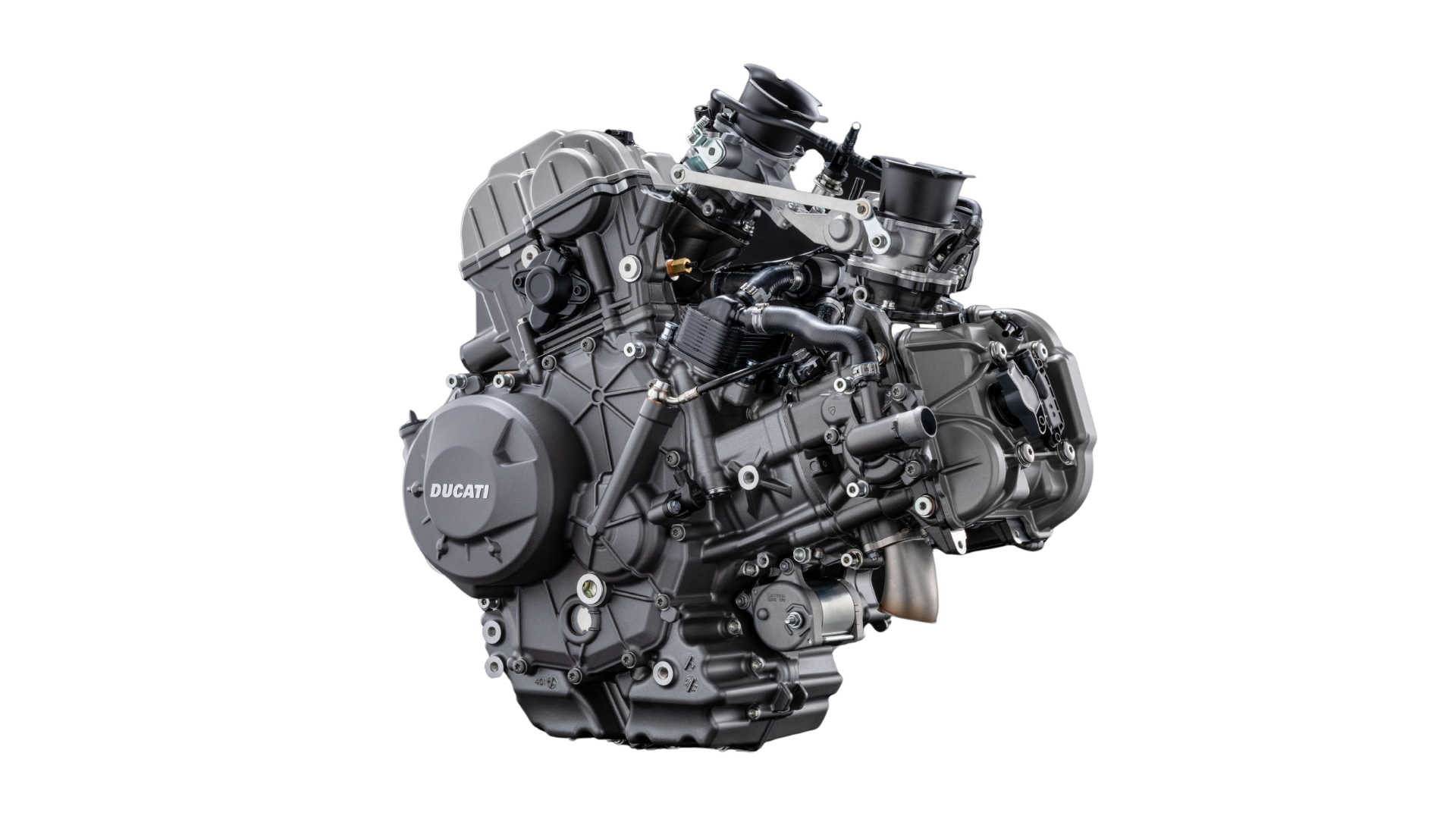
Ducati has retired the 937cc Testastretta 11-degree twin underneath its sculpted 14-litre fuel tank. Now, there’s a newly developed 890cc, liquid-cooled, 90-degree V2 engine powering the bike. Ducati has also replaced its iconic desmodromic valve system with conventional spring-loaded valves, which now offer Intake Variable Valve Timing (IVT).
But even though the engine’s displacement numbers have dropped, its performance didn’t.
- Over 80 per cent of the torque is available between 4,000 rpm and 10,000 rpm.
- You get a thick, punchy mid-range that prevents the engine from feeling sluggish.
- The new motor produces 111 bhp at 9,000 rpm and 91.1 Nm of peak torque at 7,250 rpm.
Transmission and Ducati Quick Shift 2.0
Sending power to the rear wheel is a standard 6-speed gearbox, but Ducati has thoroughly upgraded the shifting mechanism. The Monster V2 debuts Ducati Quick Shift (DQS) 2.0. Unlike traditional rod-mounted sensors, this second-generation system uses a sensor positioned directly on the gear shift drum. It provides much cleaner, crisper clutchless upshifts and downshifts, even when you are short-shifting through heavy commuter traffic rather than riding at wide-open throttle on a racetrack.
Chassis, Weight Reduction and Compliant Features

Ducati received mixed reactions when it dropped the older steel trellis frame for an aluminium front frame in the previous generation. But improvements in handling were the first thing that came to notice. Also, with the new monocoque aluminium chassis, the motorcycle now weighs just 175 kg without fuel, and 184 kg fully fuelled. It’s 4 kg lighter than its predecessor.
As for suspension duties, there’s a non-adjustable 43 mm Showa upside-down front fork and a preload-adjustable Showa rear monoshock connected to an aluminium double-sided swingarm. And bringing the Monster V2’s momentum to a halt is a premium braking setup: twin 320 mm front discs bitten by Brembo 4-piston callipers with real-time cornering ABS.
Smarter Electronics and a New 5-Inch TFT

To keep the 111 bhp in check, Ducati has heavily updated the electronics package. The previous 4.3-inch screen has been taken out for a larger, crisper 5-inch TFT colour display that remains highly legible under direct midday sunlight. Through the optional Ducati Multimedia System (DMS), it now supports turn-by-turn navigation directly on the dash.
The electronic rider aids get a 6-axis Inertial Measurement Unit (IMU). This system feeds real-time lean-angle data into the cornering ABS, multi-level traction control, wheelie control and engine brake control. And riders can select between four riding modes:
- Sport: Sharpest throttle response and minimal electronic intervention for track days.
- Road: Full 111 bhp but with a smoother throttle map and moderate safety interventions.
- Urban: Slightly softened power to make slow-speed traffic crawling manageable.
- Wet: High electronic intervention and smoothed power delivery to prevent rear-wheel slip.
Everyday Ergonomics and Practicality

The bike’s riding posture features a wide handlebar pulled closer to the rider, creating a slightly forward yet relaxed stance that avoids putting excessive weight on your wrists. The standard seat height sits at 815 mm, which is manageable for most average-height riders. However, Ducati offers other accessibility options: a low seat accessory drops the height to 795 mm, and combining that with a suspension lowering kit brings the saddle down to 775 mm.
- It has an ARAI-certified fuel economy of roughly 18.9 kmpl.
- You can achieve a realistic highway range of over 240 km from its 14-litre tank.
- Despite its performance credentials, the V2 engine manages heat reasonably well in traffic.
Ducati Monster V2 or V2+: Which One Should You Check Out?

The 2026 Ducati Monster V2 is available in two variants across three colour schemes (Ducati Red, Iceberg White and a dedicated Sport Livery). The standard Monster V2 is priced at ₹ 13.99 lakh (ex-showroom) in base Ducati Red, and ₹ 14.23 lakh for Iceberg White. The higher-tier Monster V2 Plus (+) starts at ₹ 14.34 lakh, offering cosmetic and aerodynamic extras like a body-coloured front flyscreen and a passenger seat cowl to give the rear end a sharper, single-seat look.
If riders want pure performance, the standard Monster V2 has the same 890cc engine, Showa suspension and 5-inch TFT electronics package as the Plus variant. Spending the extra ₹ 35,000 for the Monster Plus only makes sense if you strongly desire the aesthetic finish of the front visor and seat cowl directly from the showroom floor, without going after aftermarket accessories.