Spec comparison of the Ather Konarc S, Bajaj Chetak C2501 and base TVS iQube
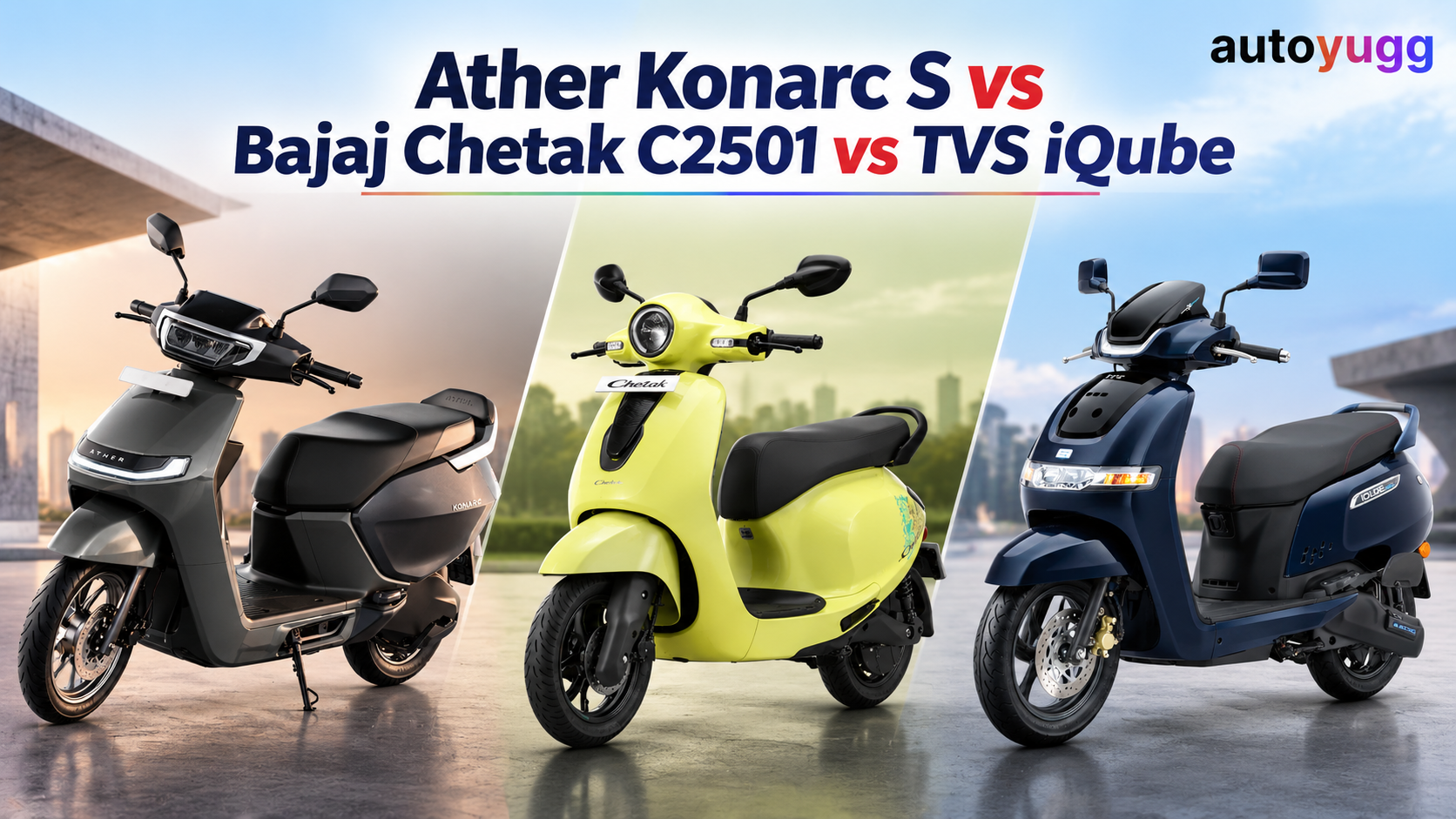
Buyers browsing entry-level electric scooters have three city runabouts to cross-shop: the Ather Konarc S, the Bajaj Chetak C2501 and the base TVS iQube. The Konarc S introduces a big-wheel platform and a practical 31-litre luggage bay for urban hauliers. The Chetak C2501 relies on an all-metal pressed-steel body and a nimble 108 kg kerb weight alongside an approachable 2.5 kWh battery. The base iQube packages a quick-charging 2.3 kWh pack for short daily routes, while the Chetak C2501 includes a relatively longer battery range.
Dimensions, Build and Design
There are clear differences in rider seating posture, passenger accommodation and underbody clearance between the three scooters.
| Dimension and Build | Ather Konarc S | Bajaj Chetak C2501 | TVS iQube (Base) |
| Length | 1,895 mm | 1,894 mm | 1,805 mm |
| Width | 734 mm | 725 mm | 645 mm |
| Height | 1,101 mm | 1,132 mm | 1,140 mm |
| Wheelbase | 1,352 mm | 1,225 mm | 1,301 mm |
| Seat Height | 770 mm | 763 mm | 770 mm |
| Ground Clearance | 165 mm | 160 mm | 157 mm |
| Kerb Weight | 126 kg | 108 kg | 115 kg |
| Underseat Storage | 31 litres | 25 litres | 32 litres |
Note: The Ather Konarc S provides a 31-litre boot, but the Bajaj Chetak C2501 cuts back on weight with a 108 kg sheet-metal build. It’s also 7 kg lighter than the composite-bodied TVS iQube and 18 kg lighter than the Konarc S.
Difference in Looks and Practicality
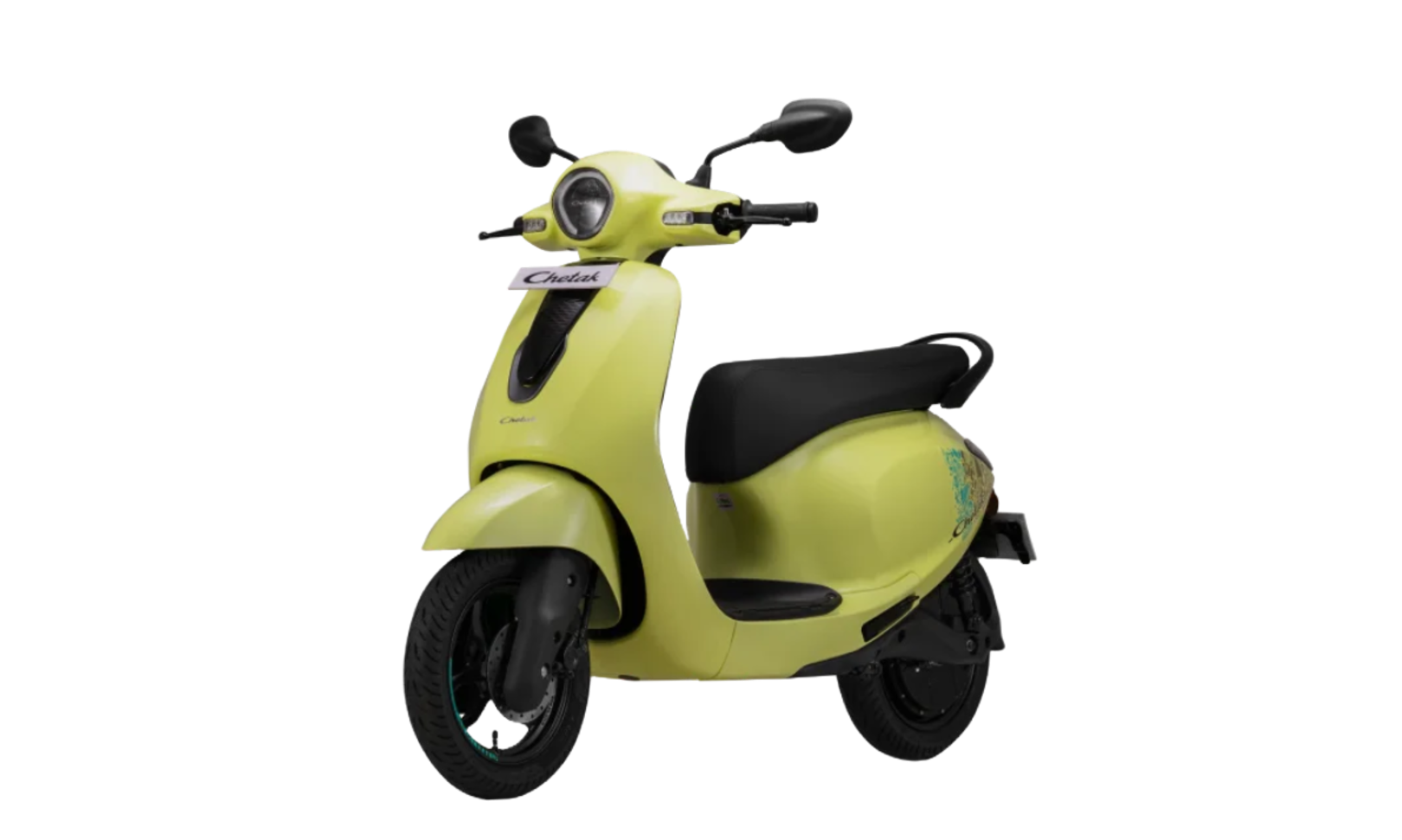
The Bajaj Chetak C2501 has a neo-retro design, featuring rounded body panels and a horseshoe LED daytime running lamp. Its steel construction appeals directly to traditional scooter buyers who want resilient exterior parts that can resist dings and scrapes. The TVS iQube, meanwhile, has an angular family-scooter shape, with a wide front handlebar cowl, a continuous horizontal LED light guide and simple fibre panels. It’s for buyers who want a conventional appearance that matches standard petrol commuters. The Ather Konarc S has a sharper, more utilitarian profile than the other two.
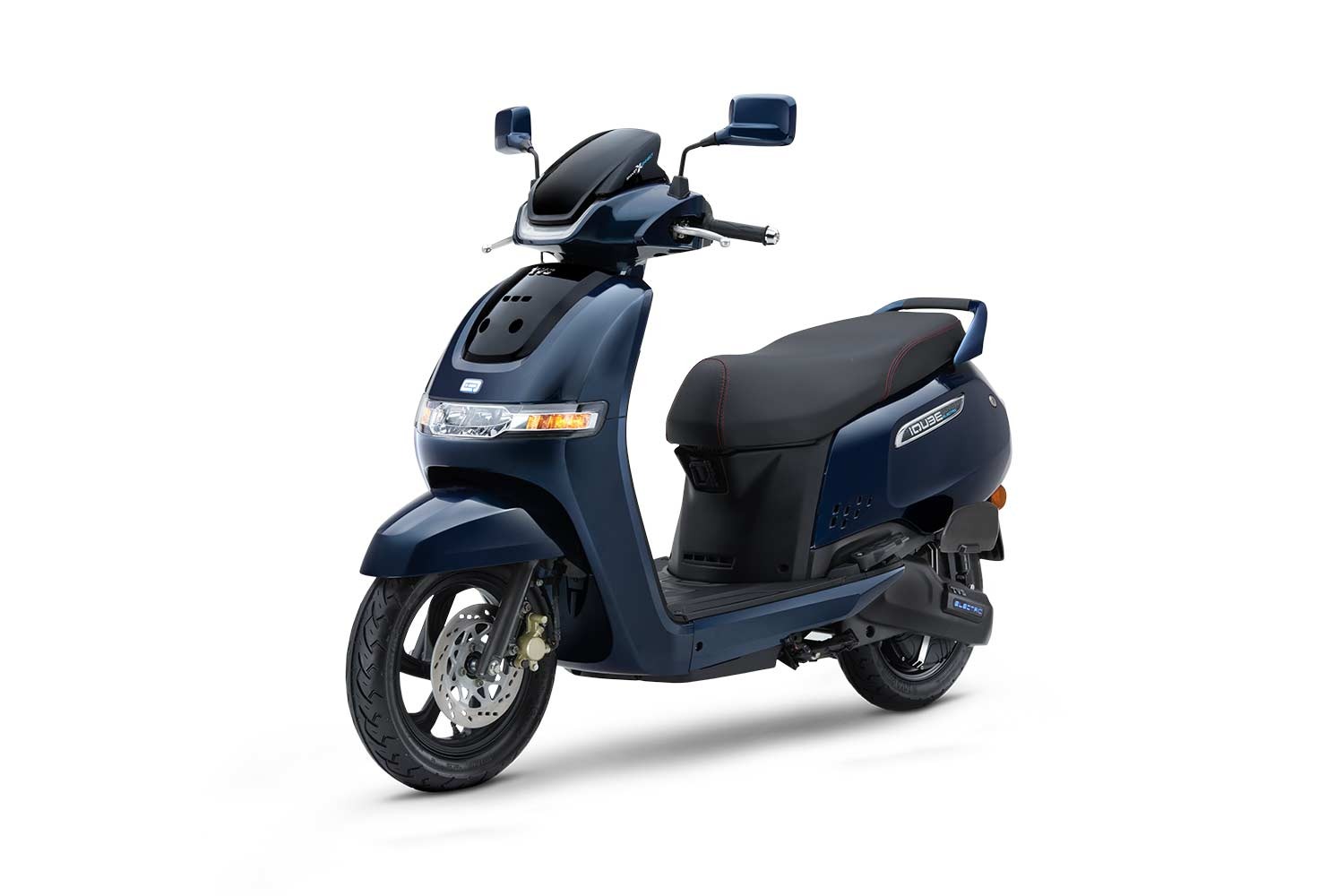
The Chetak C2501 offers 170 mm of unladen clearance, followed by the Konarc S at 165 mm and the TVS iQube at 157 mm. The 8 mm difference between the Konarc S and the iQube is roughly the width of a standard wooden pencil. Still, that small margin prevents the underside of the central battery casing from bottoming out over sharp potholes when carrying a pillion.
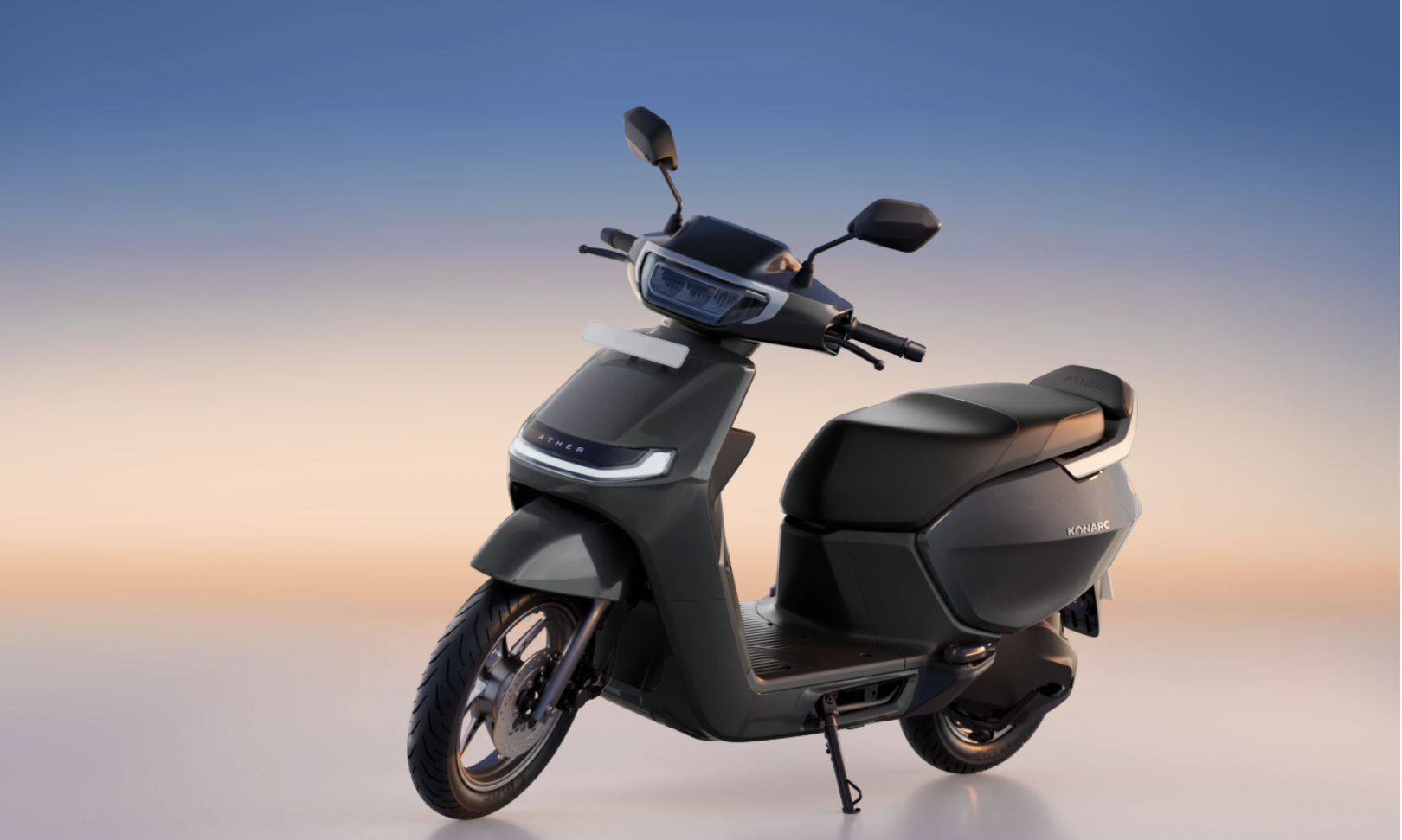
The Konarc S features a deep 31-litre underseat storage tub that fits a full-face helmet alongside an off-board charging cable. The TVS iQube provides a flat 32-litre boot that also stores an open-face helmet, shopping bags, or rain gear, aided by an illuminated utility lamp. The Chetak C2501 offers a 25-litre compartment, which can accommodate a helmet, and requires riders to rely on its external apron bag hook for extra luggage. For footboard utility, the iQube offers the widest flat floor space, letting riders carry a 20-litre water bottle between their feet.
Battery, Motor and Charging Comparison
The table below explains the powertrain and battery configurations of the three scooters.
| Specification | Ather Konarc S | Bajaj Chetak C2501 | TVS iQube (Base) |
| Battery Pack Capacity | 2.1 kWh | 2.5 kWh | 2.3 kWh |
| Ingress Protection | IP67 (Battery and Motor) | IP67 (Battery and Motor) | IP67 (Battery and Motor) |
| Motor Configuration | Mid-drive PMSM | Hub-mounted BLDC | Hub-mounted BLDC |
| Power | 4 kW | 2.2 kW | 3.68 kW |
| Torque | 16 Nm | 62 Nm | 33 Nm |
| Top Speed | 70 kmph | 55 kmph | 68 kmph |
Note: The TVS iQube base variant recharges to 80% in 2 hours and 50 minutes thanks to its compact 2.3 kWh battery and 950W charger, while the Chetak C2501 provides the highest certified IDC range at 113 km.
Daily Electronics and Tech
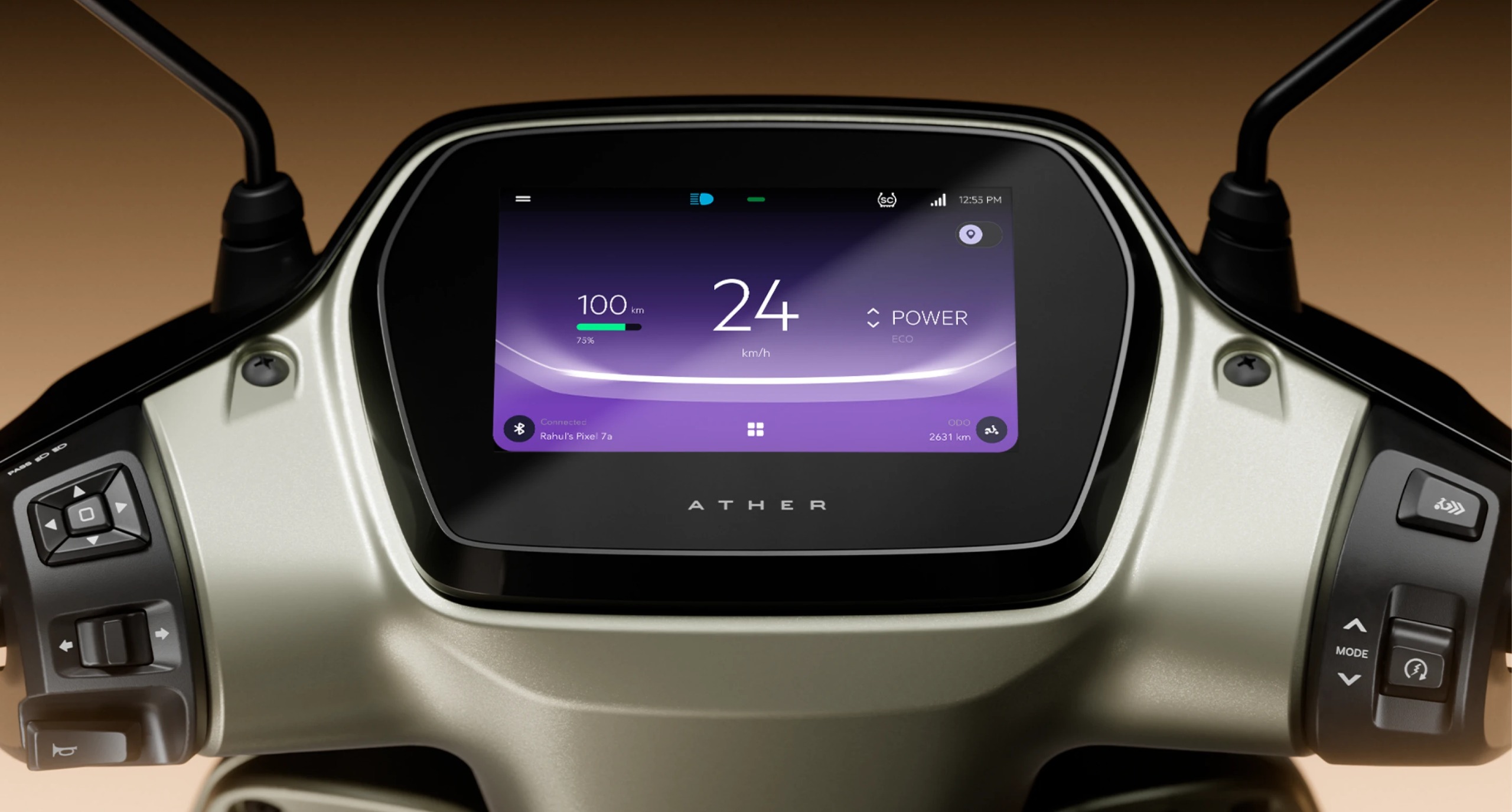
The Ather Konarc S uses a 4.2-inch LCD console that pairs high-contrast white text with a deep black background. This screen remains readable under direct, midday sun, displaying vehicle speed, trip readouts, state of charge and basic navigation turn arrows with the help of Bluetooth pairing. Ather, however, does not provide touch controls on the base variant.
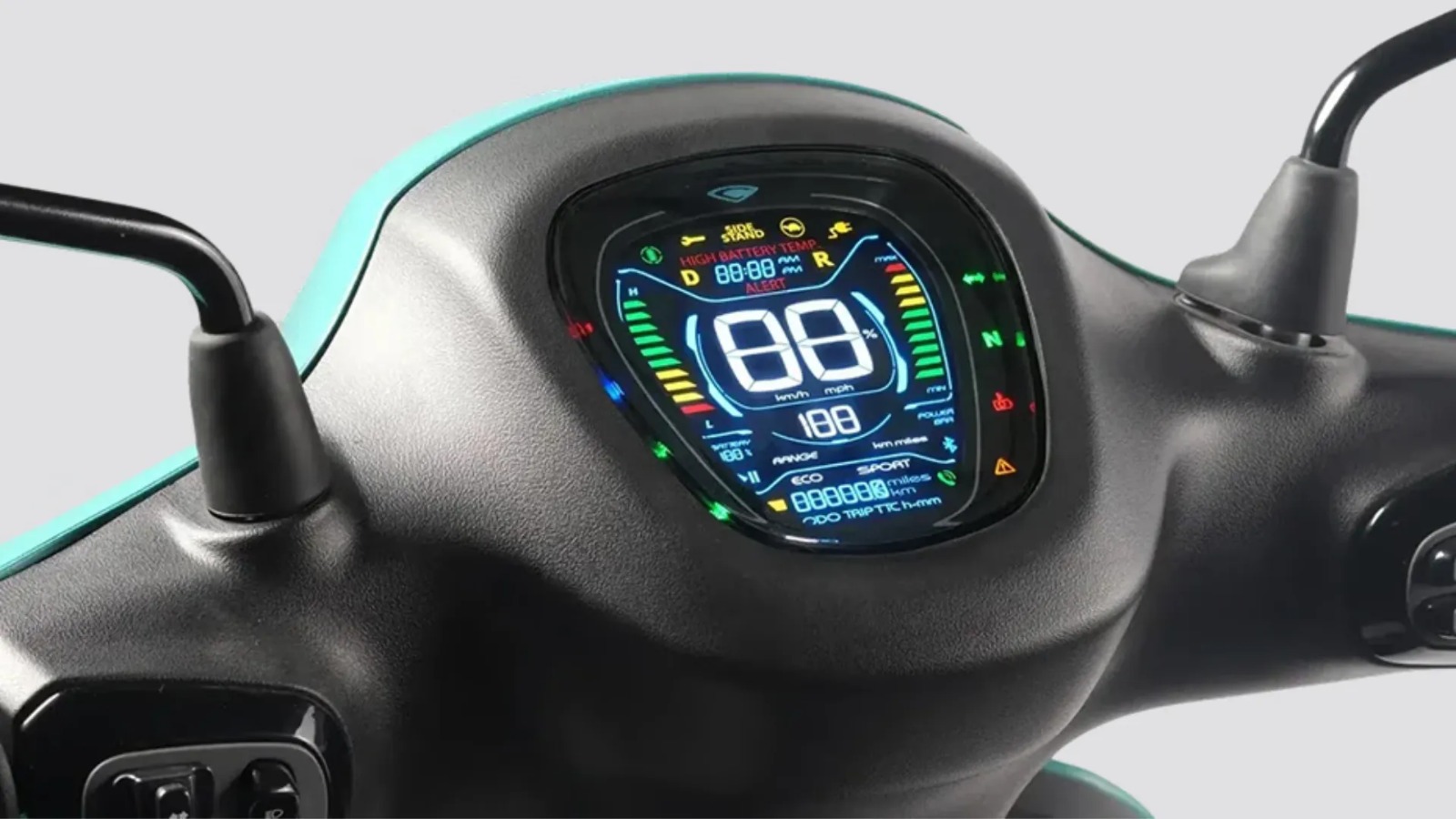
The Bajaj Chetak C2501 features a clear colour LCD. It presents speed, battery percentage and trip readouts clearly, but locking or unlocking smartphone connectivity, turn-by-turn navigation and dedicated Eco and Sport modes requires purchasing Bajaj’s optional TecPac software upgrade.
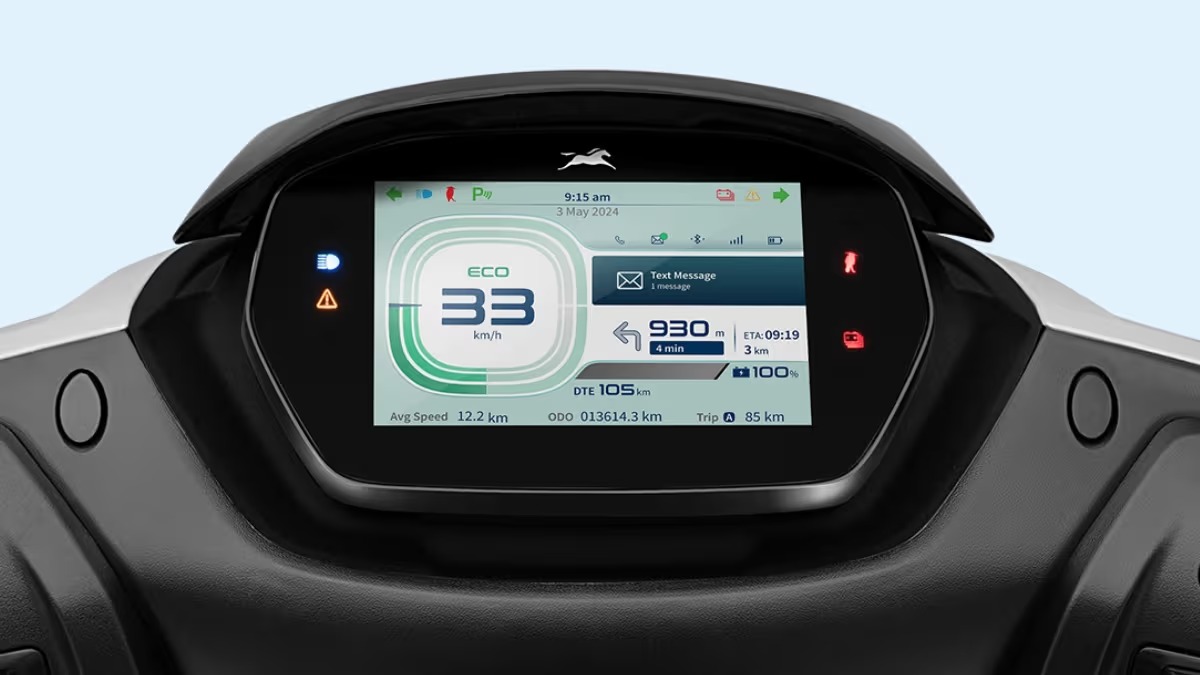
The base TVS iQube also includes a 5-inch LCD as factory standard. It features day and night display themes, incoming call notifications, side-stand alerts and a dynamic distance-to-empty readout that adjusts according to throttle input. The display is controlled with a four-way directional pad on the left handlebar switchgear.
Safety and Braking Hardware
All three scooters are family-oriented. But they still offer the essential standard equipment needed to navigate Indian roads.
| Specification | Ather Konarc S | Bajaj Chetak C2501 | TVS iQube (Base) |
| Front Brake | 130 mm Drum | 130 mm Drum | 130 mm Drum |
| Rear Brake | 130 mm Drum | 130 mm Drum | 130 mm Drum |
| Braking System | Combined Braking System | Combined Braking System | Combined Braking System |
| Front Suspension | 30 mm Telescopic Forks | Single-sided leading-link | Telescopic Hydraulic Forks |
| Rear Suspension | Monoshock | Dual Shock Absorbers | Twin Hydraulic Dampers |
| Wheel Size | 14-inch Front, 12-inch Rear (Alloy) | 12-inch (Alloy) | 12-inch (Alloy) |
| Tyre Dimensions | 90/90-14 Front, 100/90-12 Rear | 90/90-12 (Tubeless) | 90/90-12 (Tubeless) |
Price and Cost Per Kilometre
We take a look at the ex-showroom prices of all three scooters and their actual running costs.
| Financial and Running Metric | Ather Konarc S | Bajaj Chetak C2501 | TVS iQube (Base) |
| Ex-Showroom Price | ₹99,999 | ₹1.04 Lakh | ₹1.20 Lakh |
| Battery Pack Size | 2.1 kWh | 2.5 kWh | 2.3 kWh |
| Units per Full Charge (approx) | 2.3 kWh | 2.8 kWh | 2.5 kWh |
| Full Charge Cost (at ₹8/unit) | ₹18.40 | ₹22.40 | ₹20.00 |
| Real-World Range | 85 km | 90 km | 75 km |
| Running Cost per Kilometre | ₹0.21 | ₹0.24 | ₹0.27 |
Note: The TVS iQube carries the highest showroom price at ₹1.20 lakh, whereas the Ather Konarc S achieves the lowest running cost at ₹0.21 per kilometre.
Calculating home electricity consumption at an average rate of ₹8 per unit (kWh) shows that all three scooters offer high savings compared to petrol alternatives. The Chetak C2501 draws around 2.8 units of electricity, costing ₹22.40 for a full charge that delivers roughly 90 km of real-world range. You get an operating cost of ₹0.25 per kilometre. The Konarc S consumes roughly 2.3 units to deliver roughly 85 km of range, which works out to ₹0.22 per kilometre. And the base TVS iQube draws 2.5 units for 75 km of range, which means a running cost of ₹0.27 per kilometre. Compared to a 110cc petrol scooter that costs roughly ₹2.20 per kilometre to run, all three electric models lower daily commuting costs by over 85%.
Conclusion
The base TVS iQube is equipped well enough for commuters with short daily routes who want a fast 2-hour 50-minute recharge time. The Bajaj Chetak C2501 is more ideal for riders who value a durable pressed-steel body and desire a 90 km real-world range for uninterrupted daily commutes.
In contrast to the two, the Ather Konarc S is for users who need a big-wheel platform and high ground clearance as well for handling uneven roads. Overall, the ideal scooter between the three depends entirely on whether you want low purchase cost, exterior durability or daily storage practicality.