A technical comparison between Honda’s refreshed midsize SUV and segment-leader Hyundai Creta.

Honda Cars India has introduced a facelift for its Elevate nameplate. It now has a new flagship ZX+ trim, which comes with features like factory-fitted 360-degree surround-view cameras and segment-first rear-seat ventilation. The ex-showroom prices for the facelifted model are between ₹11.80 lakh and ₹18.40 lakh, competing directly against the Hyundai Creta, a popular option in the same space costing about ₹10.91 lakh to ₹20.46 lakh.
In this review, we have discussed in detail how both SUVs approach family transportation duties with quite different mechanical philosophies. And the buying decision between the two vehicles will mostly fall upon whether you value the simple reliability of a high-revving naturally aspirated petrol engine, or the powertrain diversity of turbo-petrol and diesel engines.
Dimensions, Stance and Everyday Cargo Practicality
The Honda Elevate has 220 mm of unladen ground clearance and a 458-litre boot, i.e., a 30 mm obstacle-clearance advantage and 25 litres more luggage volume than the Hyundai Creta.
| Dimensions and Practicality | Honda Elevate | Hyundai Creta |
| Length | 4,312 mm | 4,330 mm |
| Width | 1,790 mm | 1,790 mm |
| Height | 1,650 mm | 1,635 mm |
| Wheelbase | 2,650 mm | 2,610 mm |
| Ground Clearance (Unladen) | 220 mm | 190 mm |
| Boot | 458 litres | 433 litres |
| Fuel Tank | 40 litres | 50 litres |
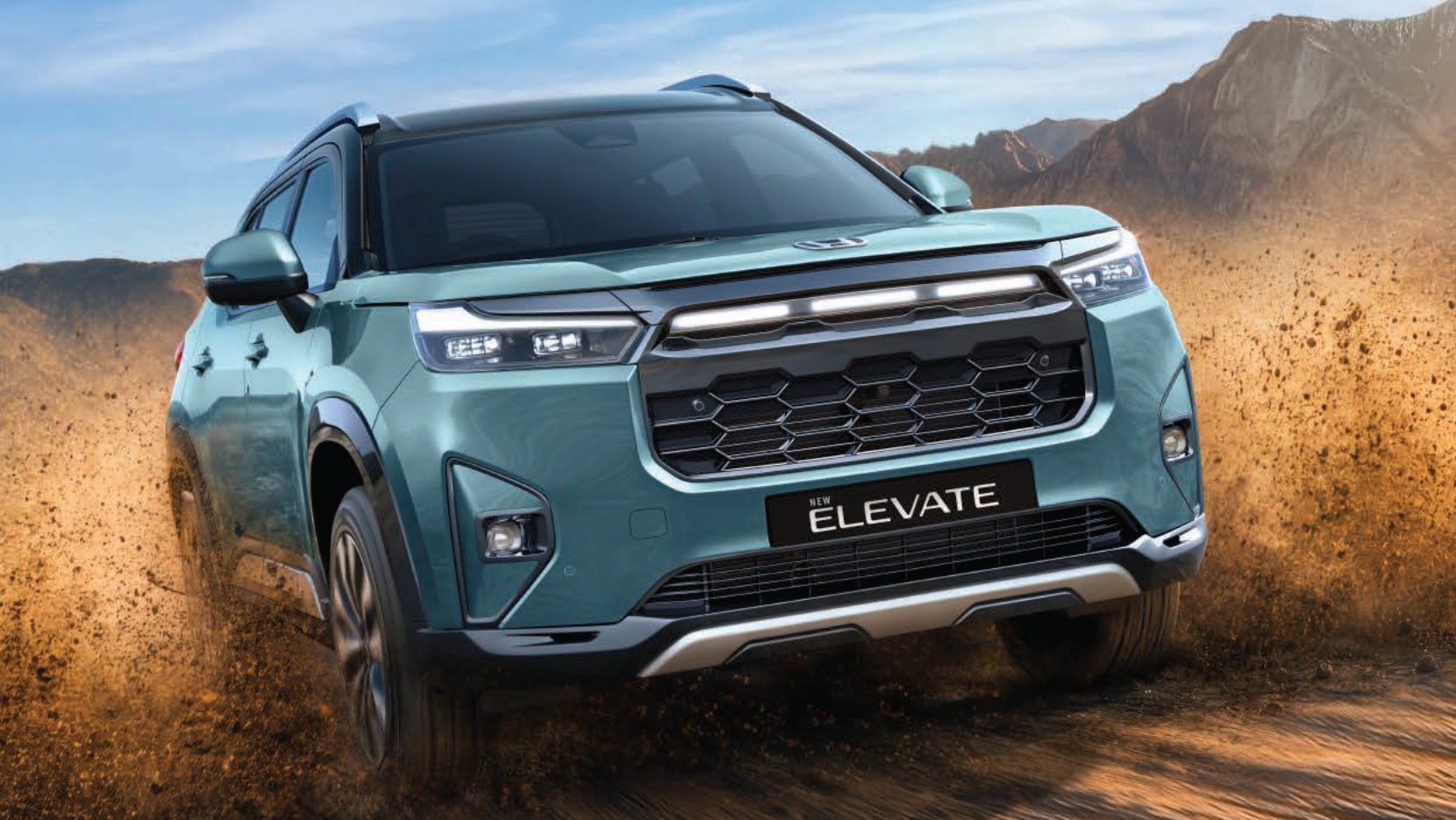
The Honda Elevate has an upright, traditional SUV design. It stands 1,650 mm tall, which is 15 mm taller than the Creta. Its boxy proportions and high bonnet line give the driver a clear view of the road corners, while its 2,650 mm wheelbase is also 40 mm longer than the Creta’s. But its 40-litre fuel tank limits cruising range between refills compared to the Creta.

The Hyundai Creta, meanwhile, has a crossover design. While it sits 15 mm lower than the Elevate, interior room is spacious for five occupants. Rear passengers benefit from standard two-step reclining seatbacks and rear-door window sunblinds for total comfort on long highway trips. Its larger 50-litre fuel tank provides roughly 120 to 180 kilometres of extra highway cruising range between fuel stops.
Overall, the Elevate has better rough-road clearance and more luggage volume, whereas the Creta offers higher fuel capacity and adjustable rear seatback angles.
Powertrain Options, Mechanical Performance and Drivetrain Diversity
The Hyundai Creta offers three engines, including a turbo-petrol and a turbo-diesel. In contrast, the Honda Elevate only has a naturally aspirated petrol engine.
| Specification | Honda Elevate 1.5 i-VTEC | Hyundai Creta 1.5 MPi Petrol | Hyundai Creta 1.5 U2 CRDi Diesel | Hyundai Creta 1.5 Turbo GDi Petrol |
| Engine | 1.5L 4-Cyl Naturally Aspirated | 1.5L 4-Cyl Naturally Aspirated | 1.5L 4-Cyl Turbocharged Diesel | 1.5L 4-Cyl Turbocharged Petrol |
| Power | 119.3 bhp @ 6,600 rpm | 113.4 bhp @ 6,300 rpm | 114.4 bhp @ 4,000 rpm | 157.8 bhp @ 5,500 rpm |
| Torque | 145 Nm @ 4,300 rpm | 143.8 Nm @ 4,500 rpm | 250 Nm @ 1,500 to 2,750 rpm | 253 Nm @ 1,500 to 3,500 rpm |
| Transmission | 6-Speed MT / 7-Speed CVT | 6-Speed MT / IVT (CVT) | 6-Speed MT / 6-Speed Torque Converter AT | 7-Speed Dual-Clutch Automatic (DCT) |
| ARAI Fuel Efficiency | 15.31 kmpl (MT) / 16.61 kmpl (CVT) | 17.40 kmpl (MT) / 17.70 kmpl (IVT) | 21.80 kmpl (MT) / 19.10 kmpl (AT) | 18.40 kmpl (DCT) |
Under the Elevate’s bonnet sits the 1.5-litre four-cylinder i-VTEC petrol engine, which features dual overhead camshafts with variable valve timing and electronic lift control. For the facelift, Honda has added extra acoustic insulation material to the bulkhead and floor pans to reduce engine noise.
In the Creta, buyers who want relaxed city driving can choose the 1.5-litre MPi petrol engine. For high-mileage highway drivers, there’s the 1.5-litre U2 CRDi diesel, and for more demanding performance, there’s also a third 1.5-litre Turbo GDi petrol.
While the Elevate has proven naturally aspirated reliability, the Creta offers different efficiency requirements.
Cabin Comfort, Seating Ergonomics and Infotainment Tech
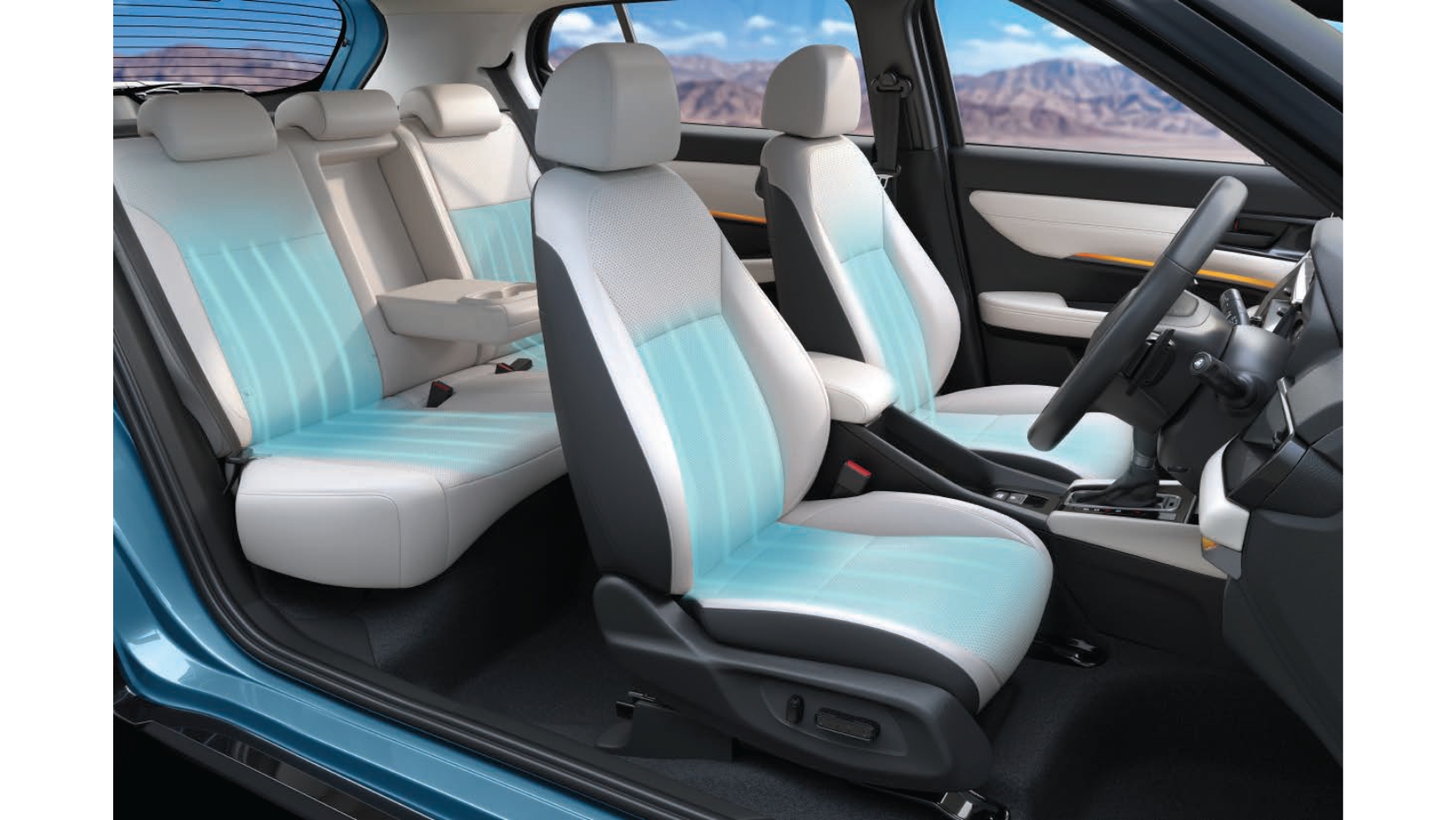
The Honda Elevate ZX+ has ventilated rear seats alongside powered front seats. At the same time, the Hyundai Creta counters with a dual-screen panoramic cockpit.
| Feature and Equipment | Honda Elevate (ZX / ZX+) | Hyundai Creta (SX / SX(O)) |
| Central Display | 10.25-inch Floating IPS HD Touchscreen | 10.25-inch Integrated HD Touchscreen |
| Driver Display | 7.0-inch Full-Colour TFT Multi-Info Display | 10.25-inch Fully Digital Supervision Cluster |
| Smartphone Integration | Wireless Apple CarPlay and Android Auto | Wireless (on 8-inch screen) / Wired on 10.25-inch |
| Audio Setup | 8-Speaker Audio System with Tweeters | 8-Speaker Bose Premium Sound System with Subwoofer |
| Front Seat Comfort | 8-Way Powered Driver + 4-Way Powered Passenger (ZX+) | 8-Way Powered Driver Seat (Passenger is Manual) |
| Ventilated Seating | Ventilated Front and Rear Seats (ZX+) | Ventilated Front Seats Only |
| Climate Control | Single-Zone Automatic Climate Control | Dual-Zone Fully Automatic Climate Control |
| Sunroof | Single-Pane Electric Sunroof with Pinch Guard | Voice-Enabled Smart Panoramic Sunroof |
| Ambient Lighting | Single-Colour Ambient Cabin Lighting (Orange) | 64-Colour Ambient Mood Lighting Strip |

The Elevate’s new top-spec ZX+ variant offers ventilated rear seats, an equipment unmatched by any rival in the midsize SUV segment. Front occupants also receive three-step cooling ventilation, an 8-way power-adjustable driver seat and a 4-way power-adjustable front passenger seat.
The Hyundai Creta has a more high-tech cabin. It houses twin 10.25-inch digital displays under a single curved binnacle. The fully digital driver cluster changes graphic themes according to drive modes (Eco, Normal, Sport). The Creta also includes a voice-activated panoramic sunroof that extends over the rear passengers.

The Elevate leads in multi-row seat cooling, but the Creta has a more digitally advanced cockpit.
Safety Equipment, Chassis Hardware and ADAS Suites
The Elevate has all-wheel disc brakes and adds Low-Speed Follow to its Honda Sensing suite on the CVT automatic variants. Conversely, the Creta also has a Level 2 ADAS package.
| Specification | Honda Elevate Facelift | Hyundai Creta |
| Airbags | 6 Airbags Standard across all variants | 6 Airbags Standard across all variants |
| Braking | Front Discs and Rear Discs (Upgraded on Facelift for the CVTs) | Front Discs and Rear Discs Standard |
| Parking Camera | 360-Degree Surround Vision Camera + LaneWatch | 360-Degree Surround View Monitor with Blind View |
| Parking Sensors | Front and Rear Parking Sensors (ZX+) | Front and Rear Parking Sensors (SX(O)) |
| ADAS | Honda Sensing (Camera-Based Vision System) | Hyundai SmartSense (Radar + Camera Fusion System) |
Safety hardware is competitive across both vehicles, with both offering six airbags, Electronic Stability Control (ESC), Hill Start Assist, and ISOFIX child-seat anchors as standard equipment from their entry-level trims.
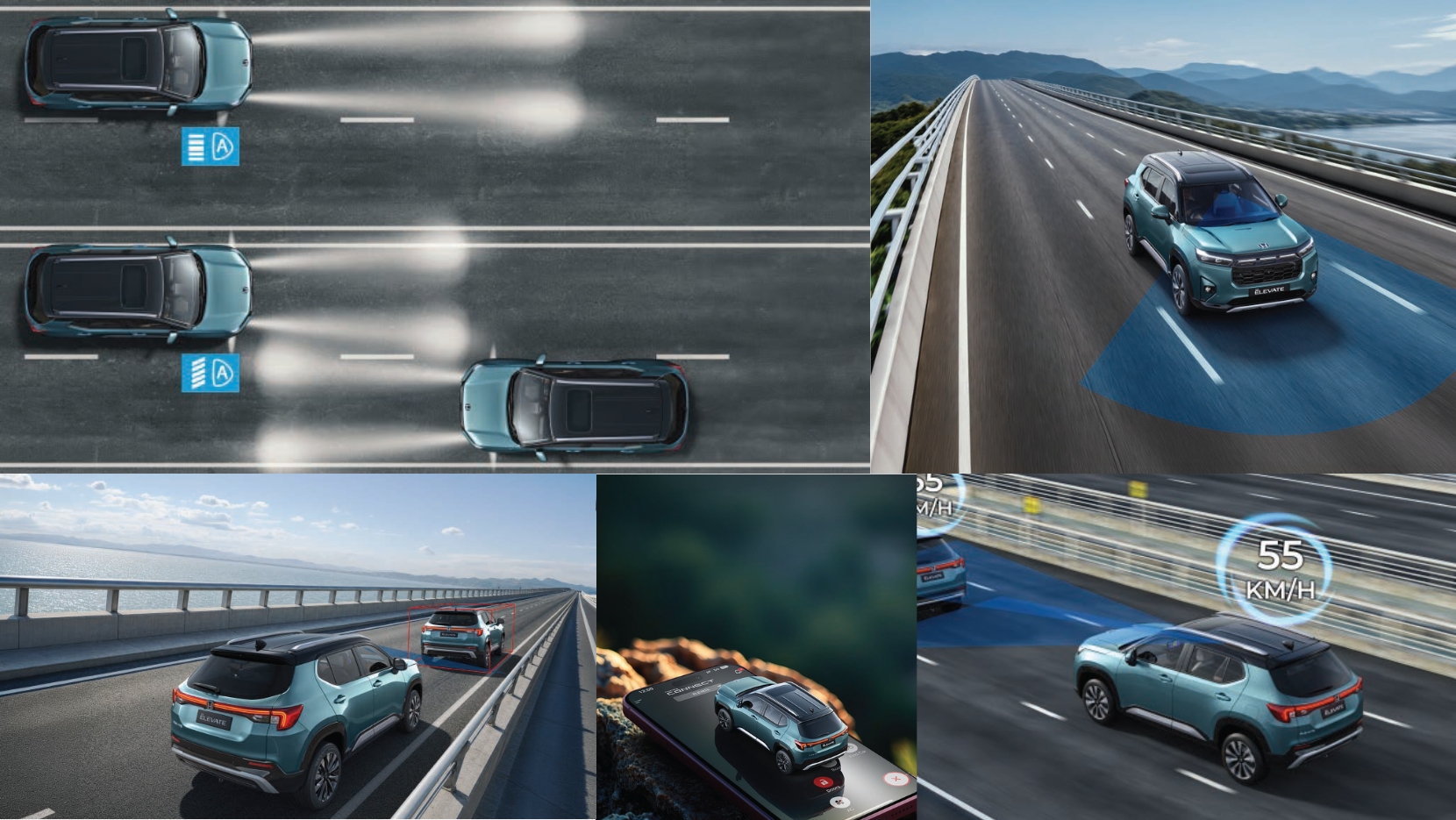
For the 2026 facelift, the Elevate’s CVT trims now receive all-wheel disc brakes and a factory-fitted 360-degree Surround Vision Camera on the ZX+ trim. Honda also retains its LaneWatch camera on the left wing mirror, allowing drivers to view curb-side traffic independently.

Hyundai SmartSense on the Creta uses a radar-camera fusion network. This setup enables 19 Level 2 ADAS functions, including Forward Collision Avoidance Assist for junction turning, Blind-Spot Collision-Avoidance Assist, Rear Cross-Traffic Collision Avoidance, and Safe Exit Warning.
While the Elevate offers extra visual-based assistance, the Creta has more advanced radar-backed active intervention.
Price Hierarchy, Variant Distribution and Running Costs
The Honda Elevate V CVT enters the automatic market at ₹13.79 lakh, undercutting the Hyundai Creta’s most accessible automatic variant (EX(O) iVT at ₹14.49 lakh to ₹14.50 lakh) by ₹70,000.
| Variant | Honda Elevate | Hyundai Creta 1.5 Petrol | Hyundai Creta 1.5 Diesel / Turbo |
| Entry Grade | ₹11.80 Lakh (SV MT) | ₹10.91 Lakh (E MT) | ₹12.53 Lakh (E Diesel MT) |
| Value / Mid Grade | ₹12.29 Lakh (V MT) | ₹12.07 Lakh (EX MT) | ₹13.66 Lakh (EX Diesel MT) |
| Core Automatic Grade | ₹13.79 Lakh (V CVT) | ₹14.50 Lakh (EX(O) iVT) | ₹17.30 Lakh (S(O) Diesel AT) |
| High-Spec ADAS Grade | ₹15.39 Lakh / ₹16.89 Lakh (ZX MT / CVT) | ₹15.98 Lakh / ₹17.48 Lakh (SX Tech MT / IVT) | ₹17.43 Lakh (SX Tech Diesel MT) |
| Luxury Flagship Grade | ₹16.80 Lakh / ₹18.30 Lakh (ZX+ MT / CVT) | ₹17.31 Lakh / ₹18.81 Lakh (SX(O) MT / IVT) | ₹19.98 Lakh (SX(O) Diesel AT) |
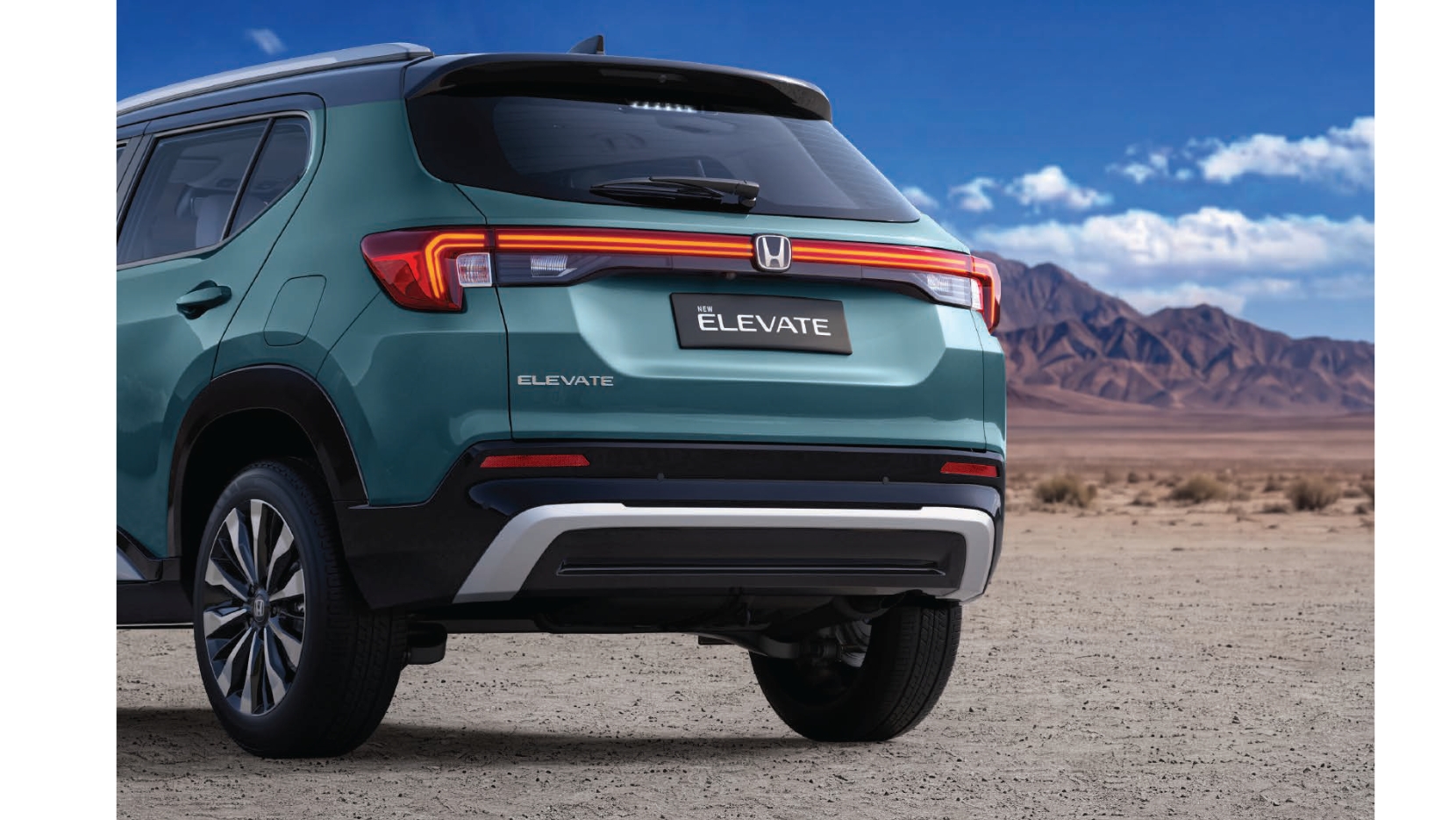
Regarding real-world running costs, the two naturally aspirated petrol engines have similar operational economics. The Honda Elevate averages roughly 11 to 13 kmpl in congested urban conditions and 15 to 16.5 kmpl on the highways, which means you have to pay ₹6.00 to ₹7.50 per kilometre at ₹100 per litre for petrol. The Creta 1.5 MPi petrol returns 11.5 to 13.5 kmpl in city traffic and 16 to 17 kmpl on highways.

However, high-mileage drivers will find the Creta’s 1.5L Diesel option more frugal, which delivers 15 to 17 kmpl in urban traffic and over 21 kmpl on highways. At ₹90 per litre for diesel, operating expenses drop to roughly ₹4.50 to ₹5.30 per kilometre.
AutoYugg Verdict: Honda Elevate Facelift or Hyundai Creta?
The updated Honda Elevate can be considered the pragmatic purchase for those who highly prefer rugged road clearance, mechanical longevity and a straightforward design. Its 220 mm ground clearance, commanding seating position and 458-litre boot can handle both difficult road conditions and family cargo demands effortlessly.
But the Hyundai Creta is the more versatile nameplate for motorists who want diverse powertrain choices and advanced cabin features. With available 1.5-litre turbo-petrol and high-torque diesel engines, it is a practical option for both performance seekers and high-mileage commuters.
If you desire high ground clearance and rear-seat cooling, go for the refreshed Honda Elevate. If you care more about powertrain flexibility and diesel fuel economy, then the Hyundai Creta is practical.


